Retention of seized property survives where recorded reasons support proceeds of crime, while stayed investigation periods are excluded from limitatio...
Specified income of Baddi Barotiwala Nalagarh Development Authority receives conditional tax exemption, retrospectively covering its designated assess...
Specified development authority income receives retrospective tax exemption, subject to non-commercial activity, unchanged income sources, and return-...
Unified Brand India framework introduces voluntary Trust Mark certification and funding support for export branding, packaging and global promotional ...
Origin Declaration authentication governs preferential tariff claims under India-UK CETA, requiring a validated reference number before import clearan...
Separate assessment orders for different years remain valid when distinct notices and hearing opportunities prevent prejudice from combined proceeding...
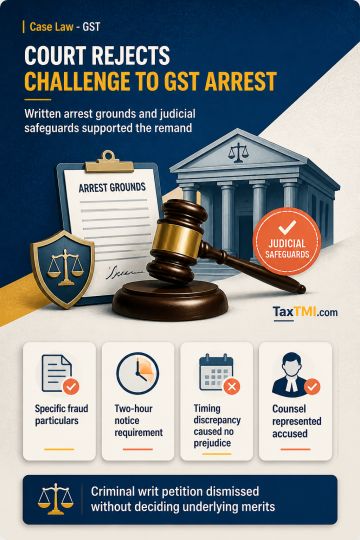
Article 22(1) requires written communication of arrest grounds within a reasonable time and at least two hours before production for remand. Written grounds identifying the accused's alleged role, wrongful input tax credit, entities involved and particulars of fraud were treated as sufficiently specific; refusal to receive them did not render them vague. Conflicting arrest times did not invalidate the arrest where same-day production before the Magistrate caused no prejudice, and recorded reasons to believe were not required to be supplied. Judicial remand was supported by counsel representation, consideration of both sides' submissions, verification of statutory safeguards and recorded satisfaction on the arrest's justification. The criminal writ petition challenging the GST arrest and remand was dismissed without addressing the underlying merits.
Article 22(1) requires written communication of arrest grounds within a reasonable time and at least two hours before production for remand. Written grounds identifying the accused's alleged role, wrongful input tax credit, entities involved and particulars of fraud were treated as sufficiently specific; refusal to receive them did not render them vague. Conflicting arrest times did not invalidate the arrest where same-day production before the Magistrate caused no prejudice, and recorded reasons to believe were not required to be supplied. Judicial remand was supported by counsel representation, consideration of both sides' submissions, verification of statutory safeguards and recorded satisfaction on the arrest's justification. The criminal writ petition challenging the GST arrest and remand was dismissed without addressing the underlying merits.
Note: It is a system-generated summary and is for quick reference only.
 TaxTMI
 of 4805























 Join Channel


 TaxTMI
