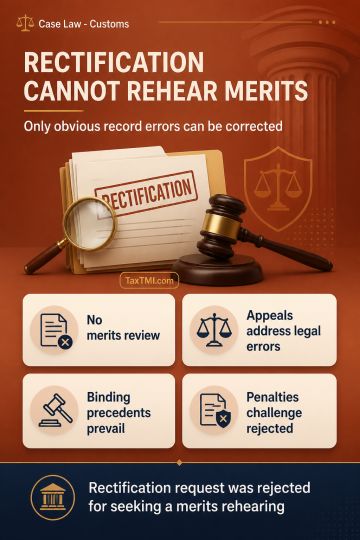
Rectification of mistake remains limited to self-evident record errors, preventing merits review through miscellaneous applications and preserving fin...
Tender creditworthiness conditions may extend to de facto Promoter Directors, with post-participation challenges generally barred absent arbitrariness...
Corporate representation in PMLA summons proceedings permitted through an authorised signatory, subject to directors' continuing cooperation and atten...
Helicopter charter classification requires effective control analysis, while territorial performance, reasoned credit orders and wilful suppression de...
Specified fund definition expands PAN exemption eligibility for registered alternative investment funds and qualifying International Financial Service...
Tax exemption for specified legal-services authority income applies retrospectively, subject to non-commercial activity, unchanged income sources, and...
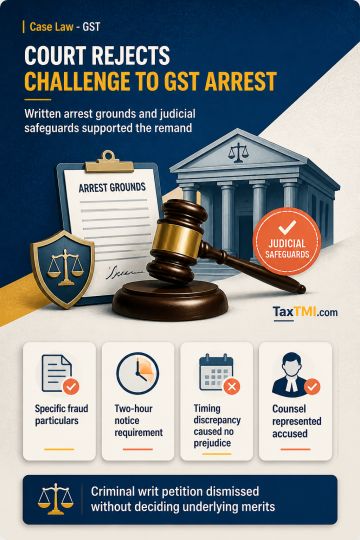
Article 22(1) requires written communication of arrest grounds within a reasonable time and at least two hours before production for remand. Written grounds identifying the accused's alleged role, wrongful input tax credit, entities involved and particulars of fraud were treated as sufficiently specific; refusal to receive them did not render them vague. Conflicting arrest times did not invalidate the arrest where same-day production before the Magistrate caused no prejudice, and recorded reasons to believe were not required to be supplied. Judicial remand was supported by counsel representation, consideration of both sides' submissions, verification of statutory safeguards and recorded satisfaction on the arrest's justification. The criminal writ petition challenging the GST arrest and remand was dismissed without addressing the underlying merits.
Article 22(1) requires written communication of arrest grounds within a reasonable time and at least two hours before production for remand. Written grounds identifying the accused's alleged role, wrongful input tax credit, entities involved and particulars of fraud were treated as sufficiently specific; refusal to receive them did not render them vague. Conflicting arrest times did not invalidate the arrest where same-day production before the Magistrate caused no prejudice, and recorded reasons to believe were not required to be supplied. Judicial remand was supported by counsel representation, consideration of both sides' submissions, verification of statutory safeguards and recorded satisfaction on the arrest's justification. The criminal writ petition challenging the GST arrest and remand was dismissed without addressing the underlying merits.
Note: It is a system-generated summary and is for quick reference only.
 TaxTMI
 of 4803















 Join Channel


 TaxTMI