Cross-examination rights and corroborated evidence limit customs penalties for misdeclaration in genuine import transactions involving documented clea...
Tariff classification of vehicle gear components follows the specific gearing entry, displacing motor-vehicle parts classification and related liabili...
Necessary-party requirements limit impleadment of independent entities, while deferred consideration does not create an appealable adverse determinati...
Food supplement classification requires common parlance and authoritative tests, preventing treatment as proprietary Ayurvedic medicines without suppo...
Specified regulatory authority income receives conditional tax exemption, subject to non-commercial activity, unchanged income character, and return f...
Tax exemption for regulatory authority income applies retrospectively, subject to non-commercial activity, unchanged income sources, and return-filing...
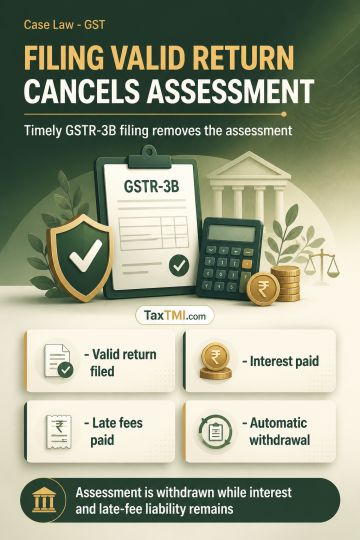
Section 62(2) of the GST law provides that a best-judgment assessment for non-filing of returns is deemed withdrawn when the registered person furnishes a valid return within the prescribed period. Furnishing the relevant GSTR-3B return, together with applicable late fee, additional late fee and interest, removes the assessment while preserving liability for interest and late fees. The provision therefore operates to withdraw the assessment automatically upon compliant post-assessment return filing.
Section 62(2) of the GST law provides that a best-judgment assessment for non-filing of returns is deemed withdrawn when the registered person furnishes a valid return within the prescribed period. Furnishing the relevant GSTR-3B return, together with applicable late fee, additional late fee and interest, removes the assessment while preserving liability for interest and late fees. The provision therefore operates to withdraw the assessment automatically upon compliant post-assessment return filing.
Note: It is a system-generated summary and is for quick reference only.
 TaxTMI
 of 4798






















 Join Channel


 TaxTMI

