Transfer pricing and tax deductions upheld on established principles, while employee contributions and warranty provisions returned for fresh examinat...
Captive transfer pricing relies on industrial consumer tariffs, while genuine quotations can benchmark effluent treatment transfers under the Other Me...
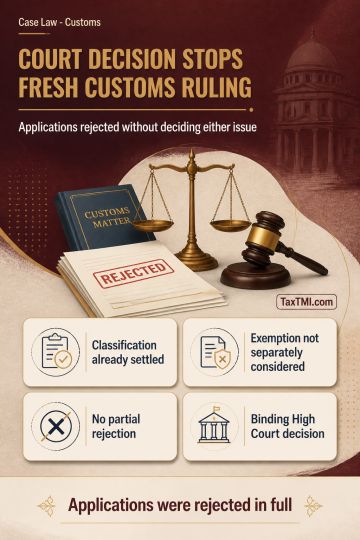
Specific tariff classification for ophthalmic instruments and extended limitation principles determine the treatment of duty demands, confiscation, an...
Integrated golf function determines classification, placing launch monitors and simulators under other golf equipment rather than measuring instrument...
Public servant status under anti-corruption law extends to recognised stock exchange leadership; constitutional and sanction challenges do not succeed...
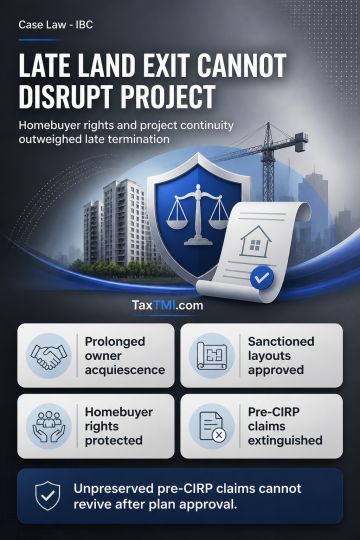
Acquiescence, homebuyer protection and clean-slate resolution principles prevent landowners from disrupting an integrated project through late termina...
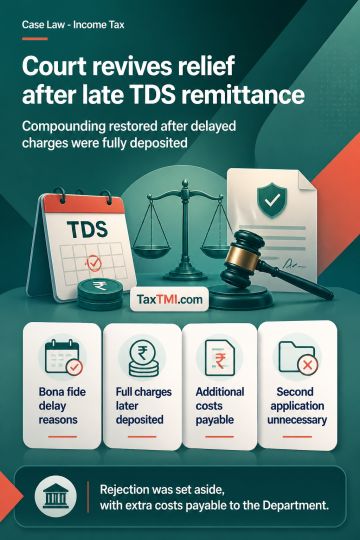
Compounding of offences for delayed remittance of tax deducted at source under Sections 276B and 278B was restored where stipulated charges were not paid within the prescribed period but were subsequently deposited in full. Financial difficulties and the company's subsequent liquidation were treated as bona fide reasons for the delay. The High Court extended the payment period up to the actual date of deposit, set aside rejection of the compounding applications, and made the earlier compounding order effective until that date. Restoration remained subject to additional costs payable to the Department, which could seek withdrawal of the deposited compounding charges. A second compounding application was unnecessary.
Compounding of offences for delayed remittance of tax deducted at source under Sections 276B and 278B was restored where stipulated charges were not paid within the prescribed period but were subsequently deposited in full. Financial difficulties and the company's subsequent liquidation were treated as bona fide reasons for the delay. The High Court extended the payment period up to the actual date of deposit, set aside rejection of the compounding applications, and made the earlier compounding order effective until that date. Restoration remained subject to additional costs payable to the Department, which could seek withdrawal of the deposited compounding charges. A second compounding application was unnecessary.
Note: It is a system-generated summary and is for quick reference only.
 TaxTMI
 of 4803
















 Join Channel


 TaxTMI