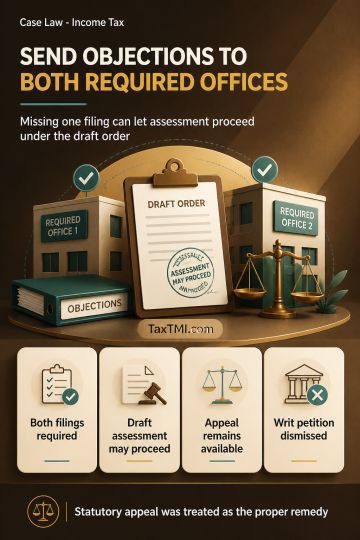
Dispute Resolution Panel objections must reach both prescribed forums; otherwise assessment may proceed and statutory appeal remains the proper remedy...
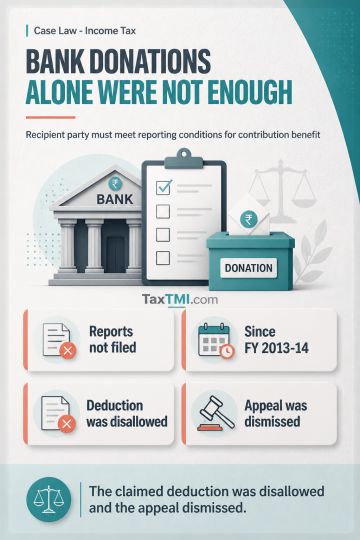
Political contribution deductions require recipient party compliance with contribution-reporting conditions; banking-channel donations alone do not qu...
Aggregation under TNMM prevents selective testing of intra-group services without comparable uncontrolled transactions, while appellate additional cla...
Protective assessment cannot duplicate identical receipts under competing characterisations; remote services did not establish a taxable permanent est...
Current account treatment of overseas tournament services removed most FEMA findings, but excess EEFC remittance and delayed repatriation remained bre...
Page of 4794
Press 'Enter' after typing page number.
521 to 540 of 95875 Results
❮
❯
❯❯
0 / 200
Expand Note
Add to Folder
No Folders have been created
+
Are you sure you want to delete "My most important" ?
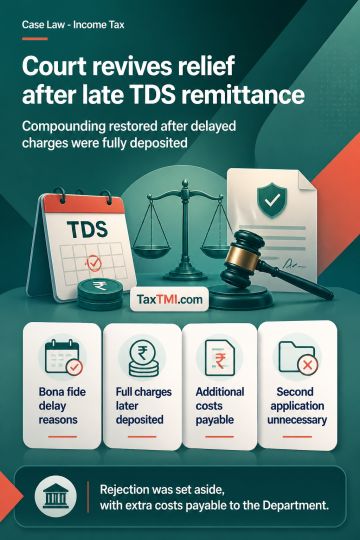
Compounding of offences for delayed remittance of tax deducted at source under Sections 276B and 278B was restored where stipulated charges were not paid within the prescribed period but were subsequently deposited in full. Financial difficulties and the company's subsequent liquidation were treated as bona fide reasons for the delay. The High Court extended the payment period up to the actual date of deposit, set aside rejection of the compounding applications, and made the earlier compounding order effective until that date. Restoration remained subject to additional costs payable to the Department, which could seek withdrawal of the deposited compounding charges. A second compounding application was unnecessary.
Compounding of offences for delayed remittance of tax deducted at source under Sections 276B and 278B was restored where stipulated charges were not paid within the prescribed period but were subsequently deposited in full. Financial difficulties and the company's subsequent liquidation were treated as bona fide reasons for the delay. The High Court extended the payment period up to the actual date of deposit, set aside rejection of the compounding applications, and made the earlier compounding order effective until that date. Restoration remained subject to additional costs payable to the Department, which could seek withdrawal of the deposited compounding charges. A second compounding application was unnecessary.
Note: It is a system-generated summary and is for quick reference only.
 TaxTMI
 of 4794
















 Join Channel


 TaxTMI