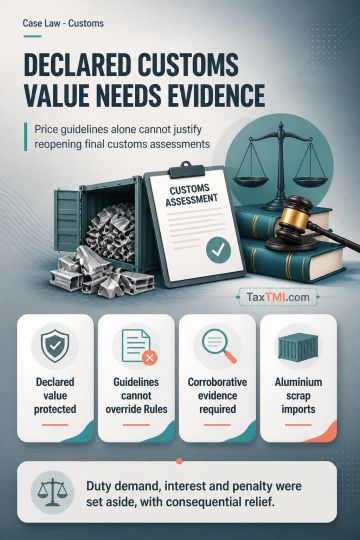
Transaction value cannot be rejected solely on non-statutory valuation guidelines without corroborative evidence supporting reassessment of final cust...
Cross-examination rights and corroborated evidence limit customs penalties for misdeclaration in genuine import transactions involving documented clea...
Tariff classification of vehicle gear components follows the specific gearing entry, displacing motor-vehicle parts classification and related liabili...
Necessary-party requirements limit impleadment of independent entities, while deferred consideration does not create an appealable adverse determinati...
Food supplement classification requires common parlance and authoritative tests, preventing treatment as proprietary Ayurvedic medicines without suppo...
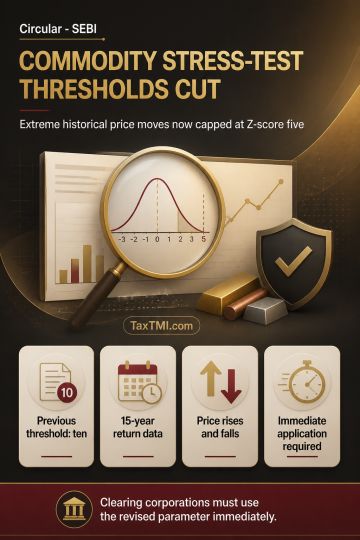
Historical-scenario stress testing for commodity derivatives now caps extreme peak historical price movements at the level corresponding to a Z-score of 5, replacing the previous Z-score threshold of 10. The cap applies to maximum percentage price rises and falls over the applicable margin period of risk, using the mean and standard deviation of returns across the preceding 15 years for Z-score calculation. Recognised clearing corporations with commodity derivatives segments must apply the revised stress-testing parameter with immediate effect.
Historical-scenario stress testing for commodity derivatives now caps extreme peak historical price movements at the level corresponding to a Z-score of 5, replacing the previous Z-score threshold of 10. The cap applies to maximum percentage price rises and falls over the applicable margin period of risk, using the mean and standard deviation of returns across the preceding 15 years for Z-score calculation. Recognised clearing corporations with commodity derivatives segments must apply the revised stress-testing parameter with immediate effect.
Note: It is a system-generated summary and is for quick reference only.
 TaxTMI
 of 4800




















 Join Channel


 TaxTMI
