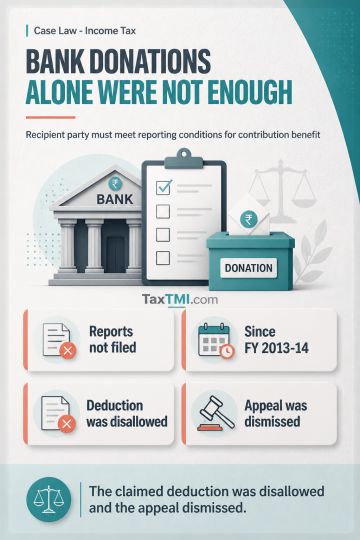
Political contribution deductions require recipient party compliance with contribution-reporting conditions; banking-channel donations alone do not qu...
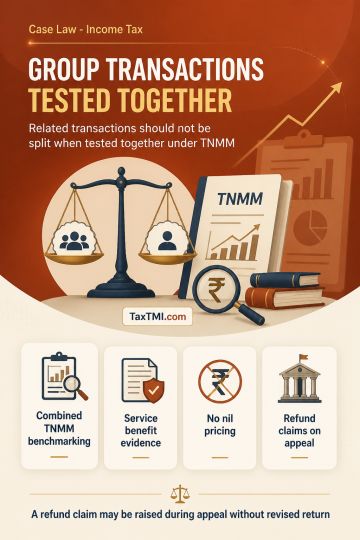
Aggregation under TNMM prevents selective testing of intra-group services without comparable uncontrolled transactions, while appellate additional cla...
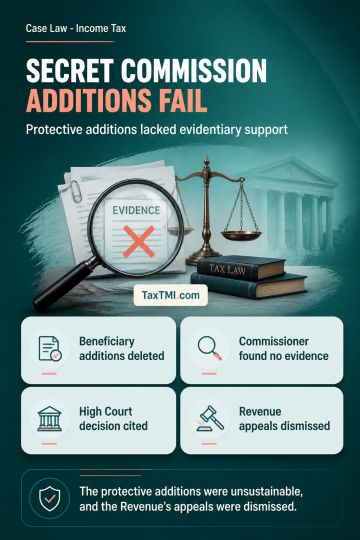
Protective assessment cannot duplicate identical receipts under competing characterisations; remote services did not establish a taxable permanent est...
Current account treatment of overseas tournament services removed most FEMA findings, but excess EEFC remittance and delayed repatriation remained bre...
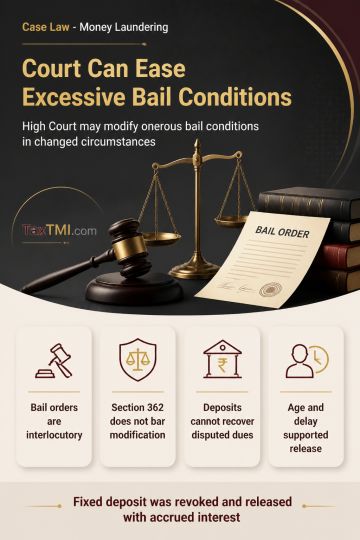
Modification of bail conditions remains available through inherent jurisdiction where onerous deposits undermine justice and cannot recover disputed d...
CENVAT credit attributable exclusively to trading is...
CENVAT credit for trading requires reversal, while taxable-service rental credit remains proportionately available and limitation issues await resolution.
Contents
Summary
Note
Bookmark
Share
✓ Copied successfully !
Print
Print Options
For full text, please login
Login to TaxTMI
Verification Pending
The Email Id has not been verified. Click on the link we have sent on
CENVAT credit attributable exclusively to trading is inadmissible because trading is not an eligible output activity. Common input-service credit used for trading and taxable output services requires reasonable reversal, with the rule 6(3D)(c) formula proposed for quantification even before trading was expressly included as an exempted service. Proportionate credit on rented premises remains available where evidence establishes use for taxable services; a landlord's service-tax default does not by itself defeat that credit. Short-payment demands based on discrepancies between service-tax and income-tax returns require proof of deliberate intent to evade for extended limitation. Conflicting views remain on whether trading-related credit permits invocation of the extended period and consequential penalties, requiring Third Member determination.
CENVAT credit attributable exclusively to trading is inadmissible because trading is not an eligible output activity. Common input-service credit used for trading and taxable output services requires reasonable reversal, with the rule 6(3D)(c) formula proposed for quantification even before trading was expressly included as an exempted service. Proportionate credit on rented premises remains available where evidence establishes use for taxable services; a landlord's service-tax default does not by itself defeat that credit. Short-payment demands based on discrepancies between service-tax and income-tax returns require proof of deliberate intent to evade for extended limitation. Conflicting views remain on whether trading-related credit permits invocation of the extended period and consequential penalties, requiring Third Member determination.
Note: It is a system-generated summary and is for quick reference only.
 TaxTMI
 of 4796














 Join Channel


 TaxTMI
