Prolonged sterilisation of development rights supports capital-gains treatment, while business-income disallowances cannot govern capital-gains comput...
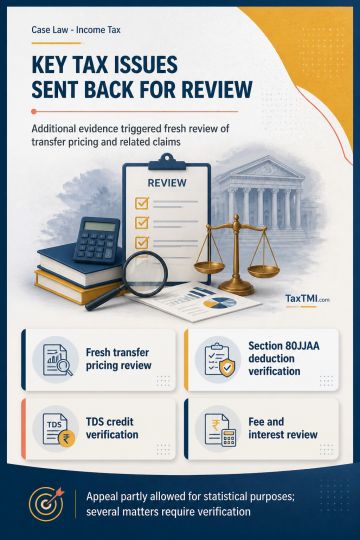
Additional evidence in transfer pricing dispute leads to fresh examination, while tax deductions, TDS credit, fee and refund interest require verifica...
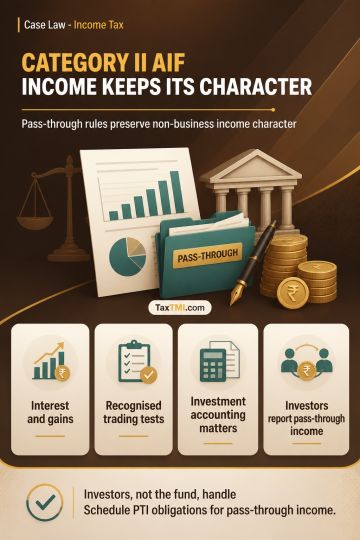
Category II AIF pass-through taxation preserves non-business income character; investment receipts cannot be reclassified without applying recognised ...
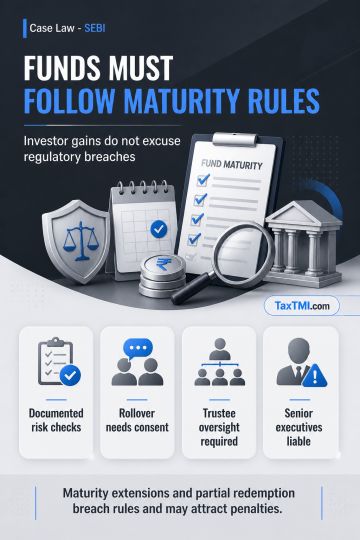
Mutual fund maturity rules require proper rollover, redemption, disclosure, and due diligence; investor gains cannot excuse regulatory breaches or pen...
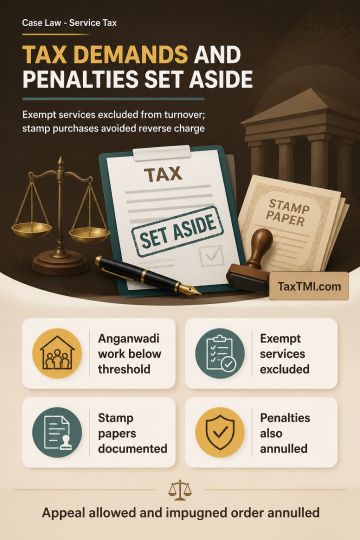
Threshold exemption excludes exempt services, while stamp-paper purchases avoid reverse charge; consequential service tax penalties were also set asid...
Section 141 of the Negotiable Instruments Act extends liability...
Vicarious liability for dishonoured company cheques may extend to non-signatory directors where complaints contain foundational responsibility averments.
Contents
Summary
Note
Bookmark
Share
✓ Copied successfully !
Print
Print Options
For full text, please login
Login to TaxTMI
Verification Pending
The Email Id has not been verified. Click on the link we have sent on
Section 141 of the Negotiable Instruments Act extends liability for dishonoured company cheques beyond the signatory to directors who were in charge of and responsible for the company's business when the offence occurred. At the summoning stage, a Magistrate need only determine whether the complaint and supporting material disclose a prima facie case, not whether conviction is supported. Allegations that directors controlled company affairs, together with the petitioner's directorship during relevant transactions, were treated as sufficient foundational averments for trial. Questions concerning actual managerial involvement and non-participation require evidence before the Trial Court. The challenge to the summoning orders and cheque-dishonour proceedings was rejected.
Section 141 of the Negotiable Instruments Act extends liability for dishonoured company cheques beyond the signatory to directors who were in charge of and responsible for the company's business when the offence occurred. At the summoning stage, a Magistrate need only determine whether the complaint and supporting material disclose a prima facie case, not whether conviction is supported. Allegations that directors controlled company affairs, together with the petitioner's directorship during relevant transactions, were treated as sufficient foundational averments for trial. Questions concerning actual managerial involvement and non-participation require evidence before the Trial Court. The challenge to the summoning orders and cheque-dishonour proceedings was rejected.
Note: It is a system-generated summary and is for quick reference only.
 TaxTMI
 of 4805









 Join Channel


 TaxTMI
