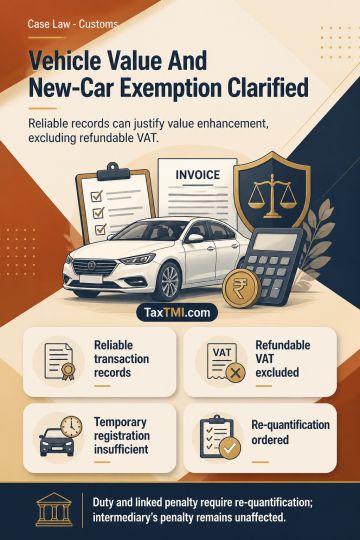
Transaction value rejection requires reliable corroboration; refundable VAT is excluded and temporary registration does not defeat new-vehicle exempti...
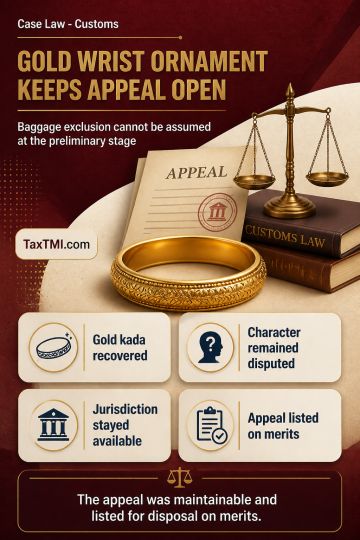
Appellate jurisdiction remains available where a wrist-worn gold ornament cannot conclusively be characterised as imported baggage at the preliminary ...
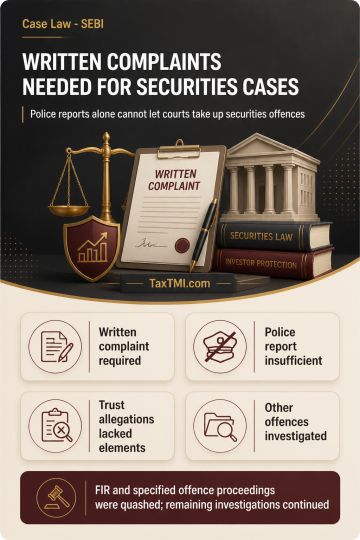
Written complaint requirement bars cognizance on police reports for securities offences, while unsupported breach of trust and cheating allegations fa...
Risk-based postal import clearance standardises electronic assessment, document requests, duty realisation and delivery controls at Foreign Post Offic...
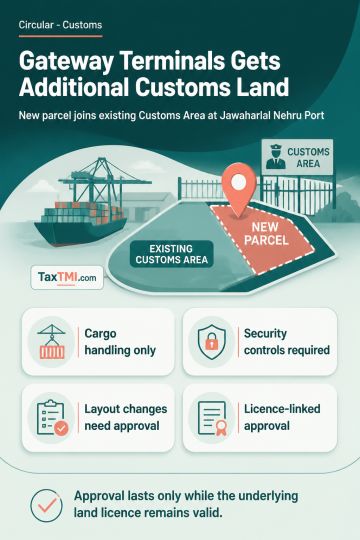
Customs Cargo Service Provider appointment extends custodianship to additional terminal land, subject to cargo-control, security and licence condition...
Section 141 of the Negotiable Instruments Act extends liability...
Vicarious liability for dishonoured company cheques may extend to non-signatory directors where complaints contain foundational responsibility averments.
Contents
Summary
Note
Bookmark
Share
✓ Copied successfully !
Print
Print Options
For full text, please login
Login to TaxTMI
Verification Pending
The Email Id has not been verified. Click on the link we have sent on
Section 141 of the Negotiable Instruments Act extends liability for dishonoured company cheques beyond the signatory to directors who were in charge of and responsible for the company's business when the offence occurred. At the summoning stage, a Magistrate need only determine whether the complaint and supporting material disclose a prima facie case, not whether conviction is supported. Allegations that directors controlled company affairs, together with the petitioner's directorship during relevant transactions, were treated as sufficient foundational averments for trial. Questions concerning actual managerial involvement and non-participation require evidence before the Trial Court. The challenge to the summoning orders and cheque-dishonour proceedings was rejected.
Section 141 of the Negotiable Instruments Act extends liability for dishonoured company cheques beyond the signatory to directors who were in charge of and responsible for the company's business when the offence occurred. At the summoning stage, a Magistrate need only determine whether the complaint and supporting material disclose a prima facie case, not whether conviction is supported. Allegations that directors controlled company affairs, together with the petitioner's directorship during relevant transactions, were treated as sufficient foundational averments for trial. Questions concerning actual managerial involvement and non-participation require evidence before the Trial Court. The challenge to the summoning orders and cheque-dishonour proceedings was rejected.
Note: It is a system-generated summary and is for quick reference only.
 TaxTMI
 of 4792





 Join Channel


 TaxTMI