Tax exemption for regulatory authority income applies retrospectively, subject to non-commercial activity, unchanged income sources, and return filing...
Dispute Resolution Panel objections must reach both prescribed forums; otherwise assessment may proceed and statutory appeal remains the proper remedy...
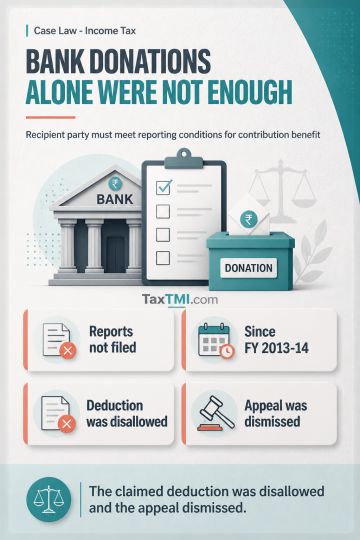
Political contribution deductions require recipient party compliance with contribution-reporting conditions; banking-channel donations alone do not qu...
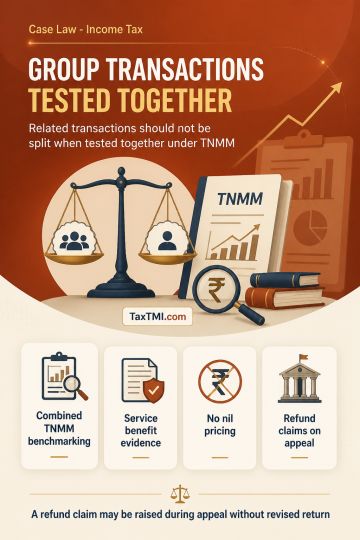
Aggregation under TNMM prevents selective testing of intra-group services without comparable uncontrolled transactions, while appellate additional cla...
Protective assessment cannot duplicate identical receipts under competing characterisations; remote services did not establish a taxable permanent est...
Page of 4792
Press 'Enter' after typing page number.
461 to 480 of 95833 Results
❮
❯
❯❯
0 / 200
Expand Note
Add to Folder
No Folders have been created
+
Are you sure you want to delete "My most important" ?
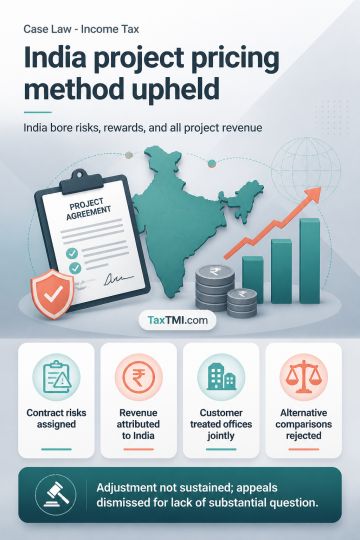
Internal CUP was treated as the most appropriate method for determining the arm's length price of project-office transactions under a turnkey power-project contract. Where the Indian project office bore the contract's risks and rewards, all revenue was attributed to India, and the unrelated customer regarded the head office and project office as one entity, the contract with that customer satisfied the comparability requirements for an internal CUP. CUP was preferred over TNMM as a more direct and suitable method, while the proposed TNMM comparables were rejected. The transfer-pricing adjustment was consequently not sustained, and the appeals were dismissed for lack of a substantial question of law.
Internal CUP was treated as the most appropriate method for determining the arm's length price of project-office transactions under a turnkey power-project contract. Where the Indian project office bore the contract's risks and rewards, all revenue was attributed to India, and the unrelated customer regarded the head office and project office as one entity, the contract with that customer satisfied the comparability requirements for an internal CUP. CUP was preferred over TNMM as a more direct and suitable method, while the proposed TNMM comparables were rejected. The transfer-pricing adjustment was consequently not sustained, and the appeals were dismissed for lack of a substantial question of law.
Note: It is a system-generated summary and is for quick reference only.
 TaxTMI
 of 4792








 Join Channel


 TaxTMI