Certificate-of-origin verification procedure governs preferential customs benefits; denial without retroactive verification was set aside with consequ...
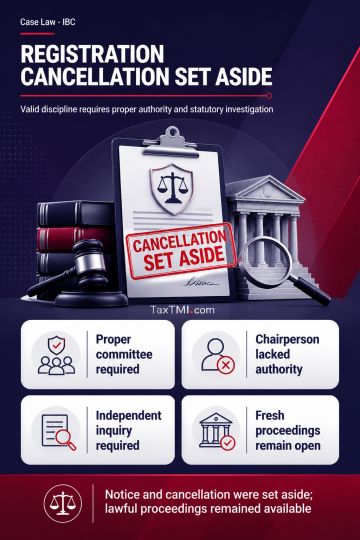
Disciplinary Committee jurisdiction and mandatory investigation requirements invalidated cancellation of an insolvency professional's registration and...
Retention of seized property survives where recorded reasons support proceeds of crime, while stayed investigation periods are excluded from limitatio...
Specified income of Baddi Barotiwala Nalagarh Development Authority receives conditional tax exemption, retrospectively covering its designated assess...
Specified development authority income receives retrospective tax exemption, subject to non-commercial activity, unchanged income sources, and return-...
Unified Brand India framework introduces voluntary Trust Mark certification and funding support for export branding, packaging and global promotional ...
Leave to appeal was unnecessary because the appellants had applied for intervention and were parties to the order rejecting those applications; the rule requiring strangers to obtain leave did not apply. Their appeals were therefore maintainable without leave. Intervention in the already disposed writ petitions was nevertheless unavailable: erstwhile directors showed only apprehensions, not a tangible subsisting right making them necessary or proper parties in proceedings concerning defreezing of company bank accounts. Pending disputes did not justify intervention or recall, and final disposal rendered the writ court functus officio, precluding further revisiting of the writ petitions. The intervention rejections and dismissal of the intra-court appeals were sustained, without barring appropriate independent remedies against the final writ order.
Leave to appeal was unnecessary because the appellants had applied for intervention and were parties to the order rejecting those applications; the rule requiring strangers to obtain leave did not apply. Their appeals were therefore maintainable without leave. Intervention in the already disposed writ petitions was nevertheless unavailable: erstwhile directors showed only apprehensions, not a tangible subsisting right making them necessary or proper parties in proceedings concerning defreezing of company bank accounts. Pending disputes did not justify intervention or recall, and final disposal rendered the writ court functus officio, precluding further revisiting of the writ petitions. The intervention rejections and dismissal of the intra-court appeals were sustained, without barring appropriate independent remedies against the final writ order.
Note: It is a system-generated summary and is for quick reference only.
 TaxTMI
 of 4803




















 Join Channel



 TaxTMI

