Cross-examination rights and corroborated evidence limit customs penalties for misdeclaration in genuine import transactions involving documented clea...
Tariff classification of vehicle gear components follows the specific gearing entry, displacing motor-vehicle parts classification and related liabili...
Necessary-party requirements limit impleadment of independent entities, while deferred consideration does not create an appealable adverse determinati...
Food supplement classification requires common parlance and authoritative tests, preventing treatment as proprietary Ayurvedic medicines without suppo...
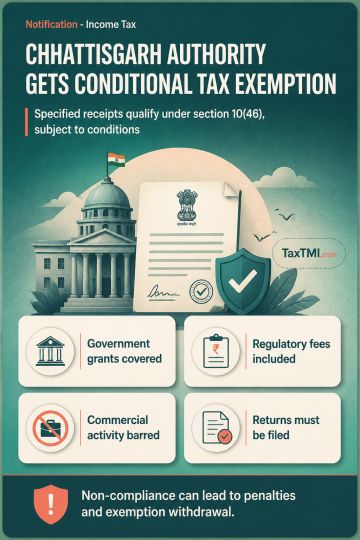
Specified regulatory authority income receives conditional tax exemption, subject to non-commercial activity, unchanged income character, and return f...
Tax exemption for regulatory authority income applies retrospectively, subject to non-commercial activity, unchanged income sources, and return-filing...
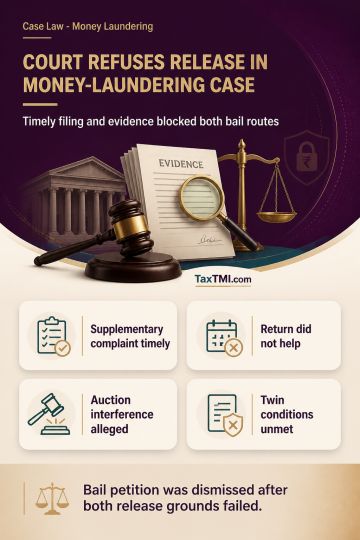
Default bail was unavailable because the supplementary complaint was filed within the prescribed period; its later return for compliance did not by itself create an indefeasible right to release. Bail under the Prevention of Money Laundering Act was also refused because the material prima facie linked the accused to activities connected with proceeds of crime, including alleged interference with the auction of attached properties. The statutory twin conditions were not met: there were no reasonable grounds to believe the accused was not guilty or unlikely to commit an offence while on bail. The cited Supreme Court ruling was distinguished on facts, and the bail petition was dismissed.
Default bail was unavailable because the supplementary complaint was filed within the prescribed period; its later return for compliance did not by itself create an indefeasible right to release. Bail under the Prevention of Money Laundering Act was also refused because the material prima facie linked the accused to activities connected with proceeds of crime, including alleged interference with the auction of attached properties. The statutory twin conditions were not met: there were no reasonable grounds to believe the accused was not guilty or unlikely to commit an offence while on bail. The cited Supreme Court ruling was distinguished on facts, and the bail petition was dismissed.
Note: It is a system-generated summary and is for quick reference only.
 TaxTMI
 of 4798





















 Join Channel


 TaxTMI