Retention of seized property survives where recorded reasons support proceeds of crime, while stayed investigation periods are excluded from limitatio...
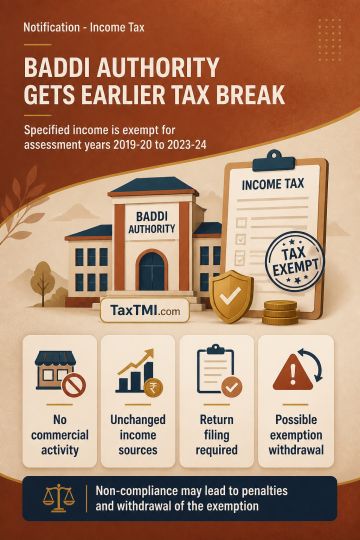
Specified income of Baddi Barotiwala Nalagarh Development Authority receives conditional tax exemption, retrospectively covering its designated assess...
Specified development authority income receives retrospective tax exemption, subject to non-commercial activity, unchanged income sources, and return-...
Unified Brand India framework introduces voluntary Trust Mark certification and funding support for export branding, packaging and global promotional ...
Origin Declaration authentication governs preferential tariff claims under India-UK CETA, requiring a validated reference number before import clearan...
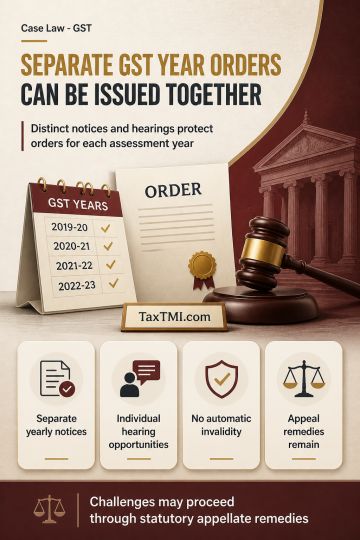
Separate assessment orders for different years remain valid when distinct notices and hearing opportunities prevent prejudice from combined proceeding...
Floating-rig services are classifiable as Supply of Tangible Goods Service, taxable only from 16 May 2008, rather than Mining Service. Service tax collected under the erroneous classification and borne by the service recipient lacked legal authority under Article 265, supporting refund even though the service provider had not challenged its assessment. Statutory refund limitation did not justify retention where payment arose from a mistake of law caused by misclassification. Certificates establishing that the recipient bore the tax burden supported the finding that refund would not result in unjust enrichment. Appellate authorities and the Tribunal could correct the classification error and grant refund without requiring a civil suit or writ petition.
Floating-rig services are classifiable as Supply of Tangible Goods Service, taxable only from 16 May 2008, rather than Mining Service. Service tax collected under the erroneous classification and borne by the service recipient lacked legal authority under Article 265, supporting refund even though the service provider had not challenged its assessment. Statutory refund limitation did not justify retention where payment arose from a mistake of law caused by misclassification. Certificates establishing that the recipient bore the tax burden supported the finding that refund would not result in unjust enrichment. Appellate authorities and the Tribunal could correct the classification error and grant refund without requiring a civil suit or writ petition.
Note: It is a system-generated summary and is for quick reference only.
 TaxTMI
 of 4801













 Join Channel



 TaxTMI