Arrest safeguards and transit remand requirements invalidated detention following inter-State transfer without communicated grounds or magistrate auth...
Arrest safeguards require disclosed grounds, relative intimation and transit remand, while duplicate prosecution under the CGST framework is unsustain...
Document Identification Number defects can invalidate GST assessments, with delayed challenges entertained conditionally where patent irregularities e...
Windmill commissioning evidence supported higher depreciation where grid connection and electricity generation proved operational use before the relev...
Pharmaceutical promotion and transfer-pricing comparability principles limited disallowances, while uncorroborated search allegations and unsupported ...
Page of 4796
Press 'Enter' after typing page number.
661 to 680 of 95918 Results
❮
❯
❯❯
0 / 200
Expand Note
Add to Folder
No Folders have been created
+
Are you sure you want to delete "My most important" ?
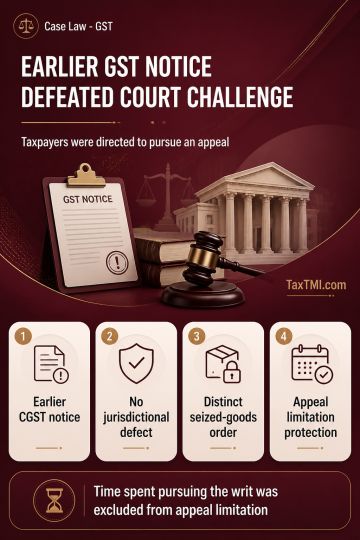
Alternative statutory remedy does not make a writ petition non-maintainable, but its entertainment remains discretionary. The statutory bar on parallel CGST proceedings applies only where State GST proceedings on the same subject matter were initiated earlier. Where the CGST show-cause notice preceded SGST notices, no jurisdictional defect arose under the bar. An earlier order concerning seized goods was distinct from later adjudication following investigation, notice under Section 74 and consideration of the taxpayer's reply, and therefore did not constitute parallel adjudication. In the absence of a jurisdictional infirmity, the petitioners were directed to pursue the statutory appeal, with writ-prosecution time excluded for limitation.
Alternative statutory remedy does not make a writ petition non-maintainable, but its entertainment remains discretionary. The statutory bar on parallel CGST proceedings applies only where State GST proceedings on the same subject matter were initiated earlier. Where the CGST show-cause notice preceded SGST notices, no jurisdictional defect arose under the bar. An earlier order concerning seized goods was distinct from later adjudication following investigation, notice under Section 74 and consideration of the taxpayer's reply, and therefore did not constitute parallel adjudication. In the absence of a jurisdictional infirmity, the petitioners were directed to pursue the statutory appeal, with writ-prosecution time excluded for limitation.
Note: It is a system-generated summary and is for quick reference only.
 TaxTMI
 of 4796



















 Join Channel


 TaxTMI

