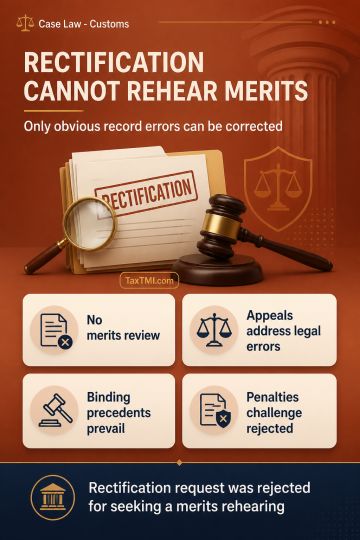
Rectification of mistake remains limited to self-evident record errors, preventing merits review through miscellaneous applications and preserving fin...
Tender creditworthiness conditions may extend to de facto Promoter Directors, with post-participation challenges generally barred absent arbitrariness...
Corporate representation in PMLA summons proceedings permitted through an authorised signatory, subject to directors' continuing cooperation and atten...
Helicopter charter classification requires effective control analysis, while territorial performance, reasoned credit orders and wilful suppression de...
Specified fund definition expands PAN exemption eligibility for registered alternative investment funds and qualifying International Financial Service...
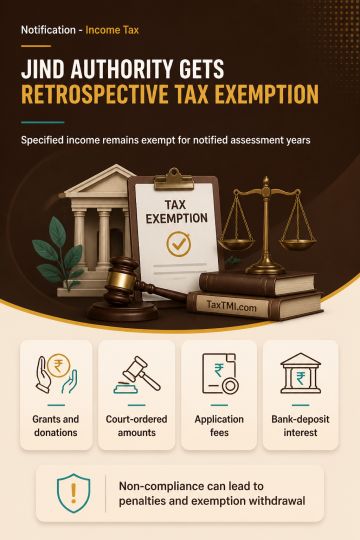
Tax exemption for specified legal-services authority income applies retrospectively, subject to non-commercial activity, unchanged income sources, and...
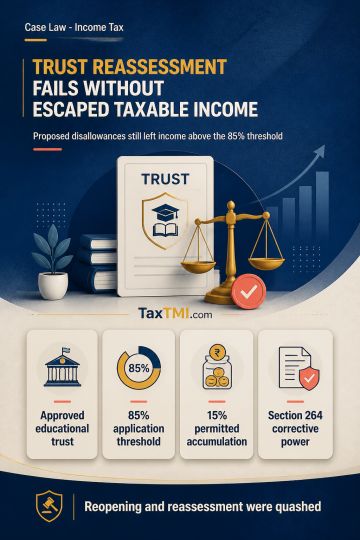
Reassessment of an approved educational trust is unwarranted where, even after proposed disallowances, income applied to its objects remains above the 85% exemption threshold and no taxable income escapes assessment. The proviso to section 10(23C)(vi) permits accumulation of up to 15% of income, while section 152(2) permits reassessment proceedings to be dropped if the alleged escaped income does not reduce the assessed tax liability. Reopening and consequential reassessment were quashed. Revisionary power under section 264 may also modify, revoke or set aside an assessment made contrary to an interim court order, provided the resulting order is not prejudicial to the assessee; administrative system limitations do not excuse failure to remedy the breach.
Reassessment of an approved educational trust is unwarranted where, even after proposed disallowances, income applied to its objects remains above the 85% exemption threshold and no taxable income escapes assessment. The proviso to section 10(23C)(vi) permits accumulation of up to 15% of income, while section 152(2) permits reassessment proceedings to be dropped if the alleged escaped income does not reduce the assessed tax liability. Reopening and consequential reassessment were quashed. Revisionary power under section 264 may also modify, revoke or set aside an assessment made contrary to an interim court order, provided the resulting order is not prejudicial to the assessee; administrative system limitations do not excuse failure to remedy the breach.
Note: It is a system-generated summary and is for quick reference only.
 TaxTMI
 of 4803
















 Join Channel


 TaxTMI