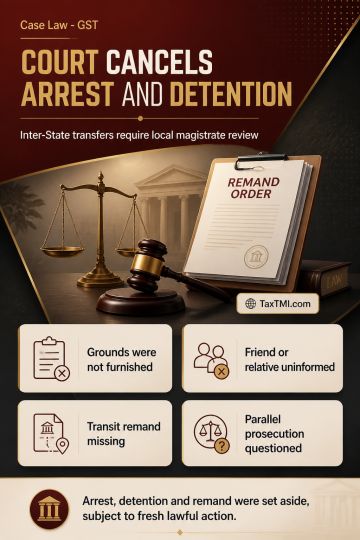
Arrest safeguards and transit remand requirements invalidated detention following inter-State transfer without communicated grounds or magistrate auth...
Arrest safeguards require disclosed grounds, relative intimation and transit remand, while duplicate prosecution under the CGST framework is unsustain...
Document Identification Number defects can invalidate GST assessments, with delayed challenges entertained conditionally where patent irregularities e...
Windmill commissioning evidence supported higher depreciation where grid connection and electricity generation proved operational use before the relev...
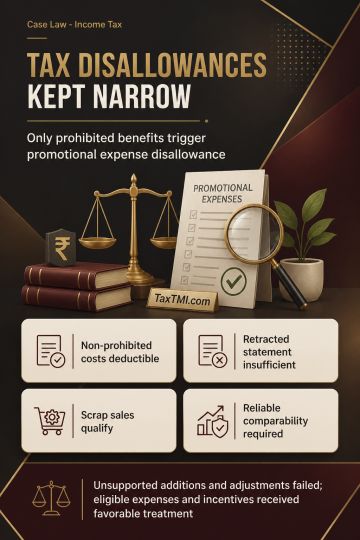
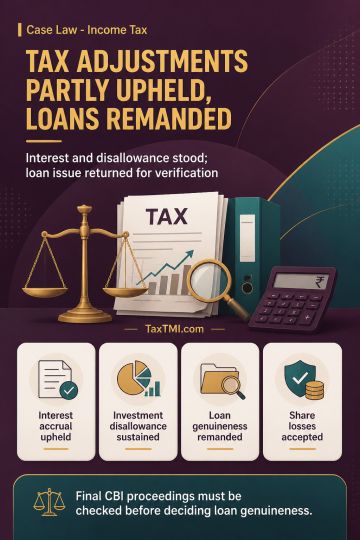
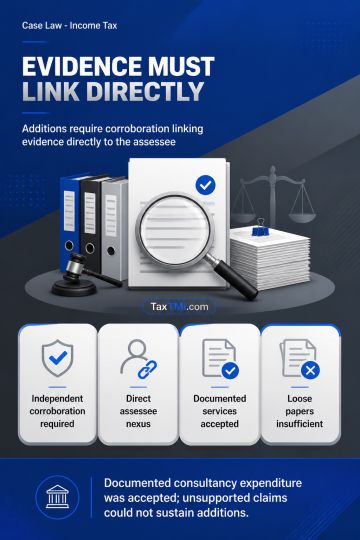
Pharmaceutical promotion and transfer-pricing comparability principles limited disallowances, while uncorroborated search allegations and unsupported ...
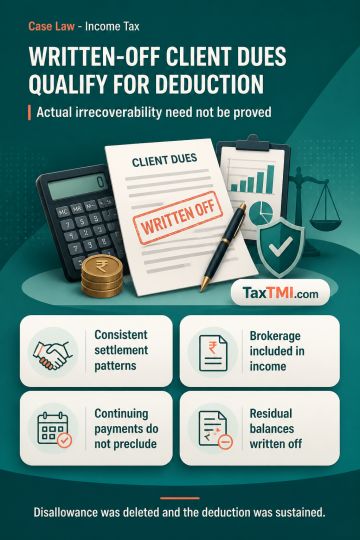
Business expenditure substantiation supports scrap credits, statutory payments and expense claims, while depreciation requires proof of actual busines...
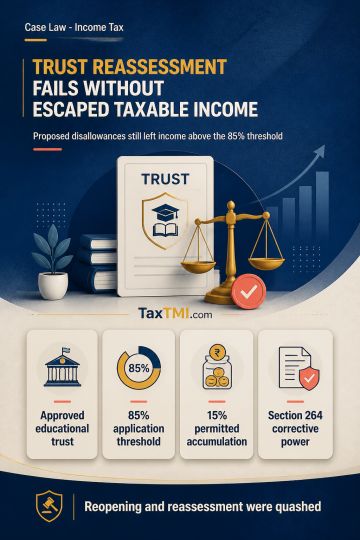
Reassessment of an approved educational trust is unwarranted where, even after proposed disallowances, income applied to its objects remains above the 85% exemption threshold and no taxable income escapes assessment. The proviso to section 10(23C)(vi) permits accumulation of up to 15% of income, while section 152(2) permits reassessment proceedings to be dropped if the alleged escaped income does not reduce the assessed tax liability. Reopening and consequential reassessment were quashed. Revisionary power under section 264 may also modify, revoke or set aside an assessment made contrary to an interim court order, provided the resulting order is not prejudicial to the assessee; administrative system limitations do not excuse failure to remedy the breach.
Reassessment of an approved educational trust is unwarranted where, even after proposed disallowances, income applied to its objects remains above the 85% exemption threshold and no taxable income escapes assessment. The proviso to section 10(23C)(vi) permits accumulation of up to 15% of income, while section 152(2) permits reassessment proceedings to be dropped if the alleged escaped income does not reduce the assessed tax liability. Reopening and consequential reassessment were quashed. Revisionary power under section 264 may also modify, revoke or set aside an assessment made contrary to an interim court order, provided the resulting order is not prejudicial to the assessee; administrative system limitations do not excuse failure to remedy the breach.
Note: It is a system-generated summary and is for quick reference only.
 TaxTMI
 of 4792















 Join Channel


 TaxTMI