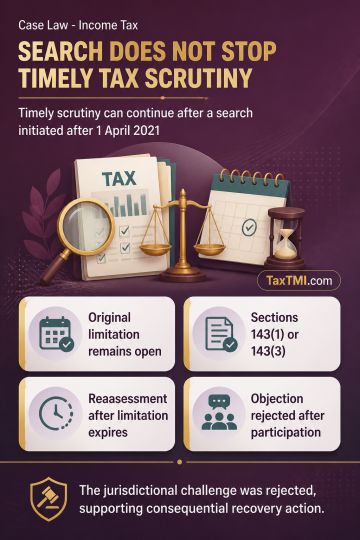
Post-search scrutiny assessment remains available where original assessment limitation is unexpired, permitting timely completion under regular assess...
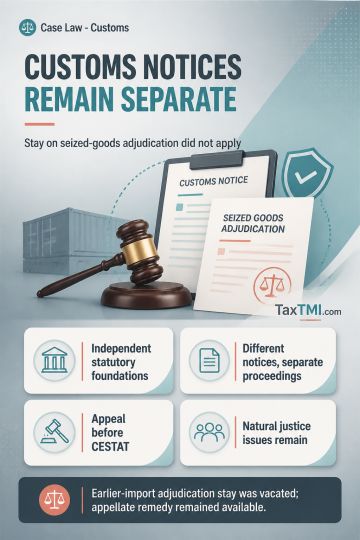
Independent show-cause notices remain separate proceedings, while customs adjudication challenges should ordinarily follow the statutory appellate rem...
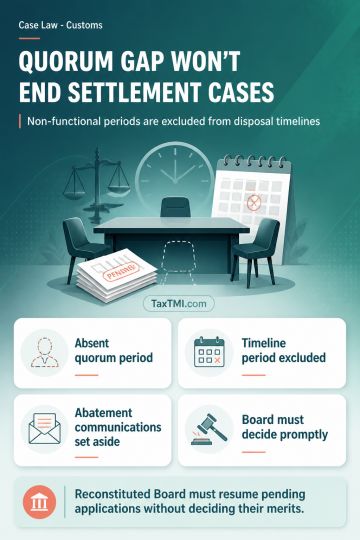
Institutional incapacity in customs settlement proceedings excludes non-functional quorum periods from statutory disposal timelines, preventing automa...
Page of 4788
Press 'Enter' after typing page number.
121 to 140 of 95749 Results
❮
❯
❯❯
0 / 200
Expand Note
Add to Folder
No Folders have been created
+
Are you sure you want to delete "My most important" ?
Domestic related-party transfer pricing is ordinarily revenue...
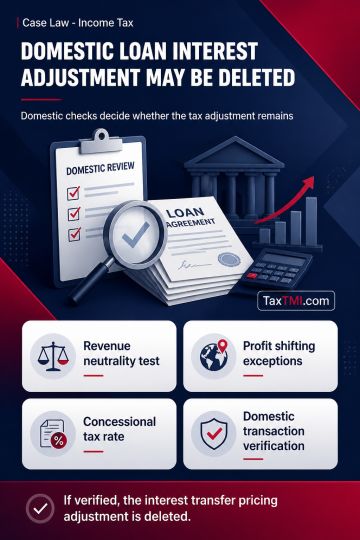
Revenue neutrality in domestic related-party loans can require deletion of interest transfer pricing adjustments after domestic-transaction verification.
Contents
Summary
Note
Bookmark
Share
✓ Copied successfully !
Print
Print Options
For full text, please login
Login to TaxTMI
Verification Pending
The Email Id has not been verified. Click on the link we have sent on
Domestic related-party transfer pricing is ordinarily revenue neutral where under-invoicing or over-invoicing does not create a tax advantage. Revenue neutrality may not apply where profits shift from a profit-making entity to a loss-making entity, or from a higher-taxed entity to a lower-taxed entity. Interest paid on a loan was examined where the borrower was subject to a lower concessional tax rate than the associated enterprise; shifting profit to the higher-taxed enterprise would not yield a tax benefit. Verification was required to establish whether the associated enterprise was domestic and the loan constituted a specified domestic transaction. If verified, the interest transfer pricing adjustment was to be deleted.
Domestic related-party transfer pricing is ordinarily revenue neutral where under-invoicing or over-invoicing does not create a tax advantage. Revenue neutrality may not apply where profits shift from a profit-making entity to a loss-making entity, or from a higher-taxed entity to a lower-taxed entity. Interest paid on a loan was examined where the borrower was subject to a lower concessional tax rate than the associated enterprise; shifting profit to the higher-taxed enterprise would not yield a tax benefit. Verification was required to establish whether the associated enterprise was domestic and the loan constituted a specified domestic transaction. If verified, the interest transfer pricing adjustment was to be deleted.
Note: It is a system-generated summary and is for quick reference only.
 TaxTMI
 of 4788












 Join Channel


 TaxTMI