Defined public benefit can retain charitable character; registration renewal requires examining genuine activities and legal compliance, not surplus a...
Capital reduction is distinct from share buy-back, preventing buy-back tax; restructuring interest and related business deductions also survive scruti...
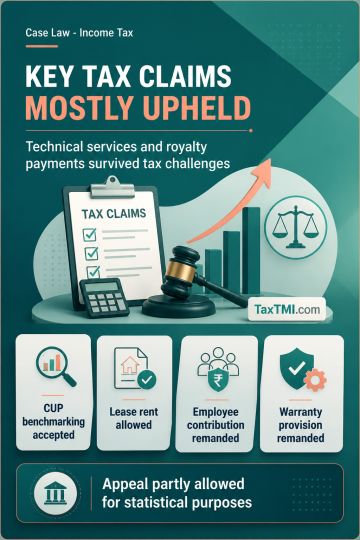
Transfer pricing and tax deductions upheld on established principles, while employee contributions and warranty provisions returned for fresh examinat...
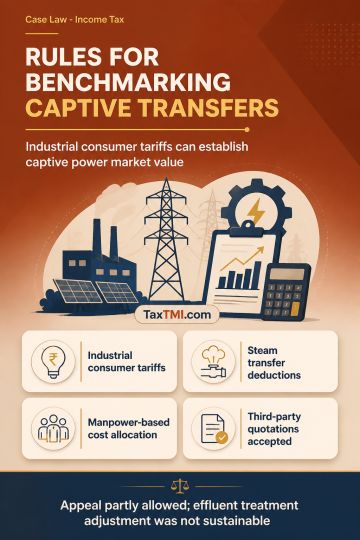
Captive transfer pricing relies on industrial consumer tariffs, while genuine quotations can benchmark effluent treatment transfers under the Other Me...
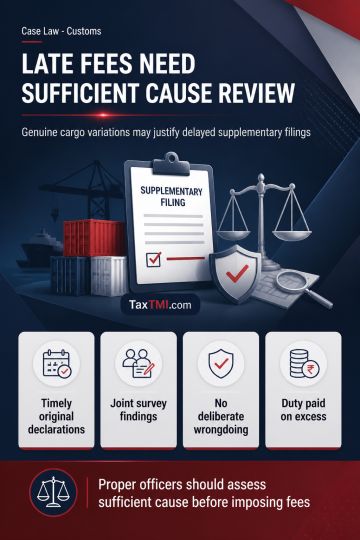
Specific tariff classification for ophthalmic instruments and extended limitation principles determine the treatment of duty demands, confiscation, an...
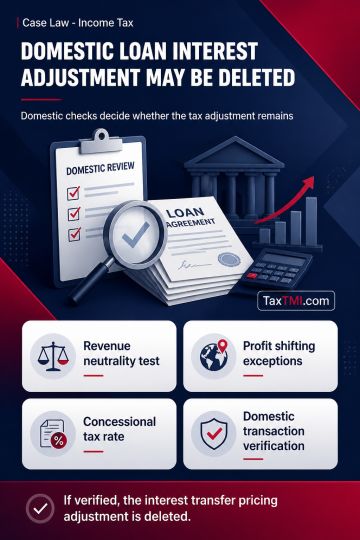
Domestic related-party transfer pricing is ordinarily revenue...
Revenue neutrality in domestic related-party loans can require deletion of interest transfer pricing adjustments after domestic-transaction verification.
Contents
Summary
Note
Bookmark
Share
✓ Copied successfully !
Print
Print Options
For full text, please login
Login to TaxTMI
Verification Pending
The Email Id has not been verified. Click on the link we have sent on
Domestic related-party transfer pricing is ordinarily revenue neutral where under-invoicing or over-invoicing does not create a tax advantage. Revenue neutrality may not apply where profits shift from a profit-making entity to a loss-making entity, or from a higher-taxed entity to a lower-taxed entity. Interest paid on a loan was examined where the borrower was subject to a lower concessional tax rate than the associated enterprise; shifting profit to the higher-taxed enterprise would not yield a tax benefit. Verification was required to establish whether the associated enterprise was domestic and the loan constituted a specified domestic transaction. If verified, the interest transfer pricing adjustment was to be deleted.
Domestic related-party transfer pricing is ordinarily revenue neutral where under-invoicing or over-invoicing does not create a tax advantage. Revenue neutrality may not apply where profits shift from a profit-making entity to a loss-making entity, or from a higher-taxed entity to a lower-taxed entity. Interest paid on a loan was examined where the borrower was subject to a lower concessional tax rate than the associated enterprise; shifting profit to the higher-taxed enterprise would not yield a tax benefit. Verification was required to establish whether the associated enterprise was domestic and the loan constituted a specified domestic transaction. If verified, the interest transfer pricing adjustment was to be deleted.
Note: It is a system-generated summary and is for quick reference only.
 TaxTMI
 of 4805
















 Join Channel


 TaxTMI