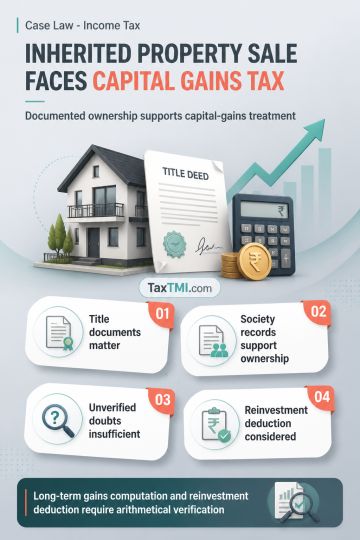
Inherited property sale proceeds require capital-gains treatment where ownership is supported by evidence, not suspicion or unverified signature doubt...
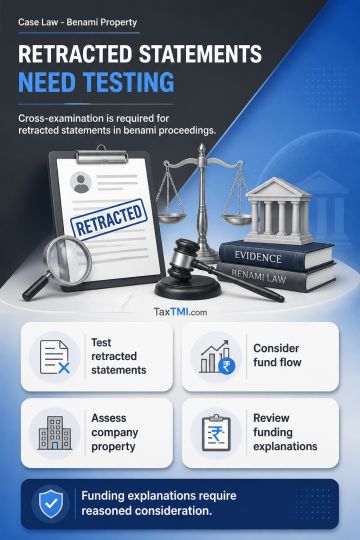
Cross-examination of retracted statements is essential where foundational evidence supports a benami allegation and documented funding explanations re...
Capital-goods exemption covers plant-modernisation accessories, while the import restriction applies only to earlier capital-goods components and spar...
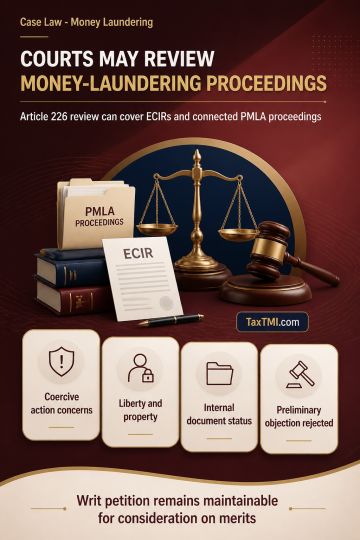
Constitutional judicial review permits challenges to ECIRs and connected money-laundering proceedings where coercive action affects fundamental intere...
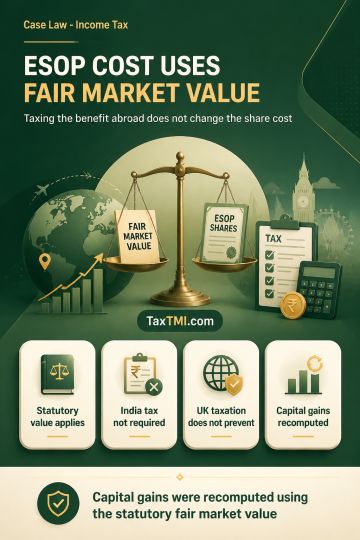
Section 49(2AA) treats the fair market value used to value an ESOP perquisite under section 17(2)(vi) as the cost of acquisition for capital gains purposes, without requiring that the perquisite be included in taxable income or taxed in India. Perquisite valuation and its taxability under domestic charging provisions or an applicable treaty operate independently. Taxation of the related perquisite in the United Kingdom does not prevent use of the statutory fair market value as the ESOP share cost. Capital gains were to be recomputed using the fair market value determined under section 17(2)(vi) read with Rule 3(8)(ii).
Section 49(2AA) treats the fair market value used to value an ESOP perquisite under section 17(2)(vi) as the cost of acquisition for capital gains purposes, without requiring that the perquisite be included in taxable income or taxed in India. Perquisite valuation and its taxability under domestic charging provisions or an applicable treaty operate independently. Taxation of the related perquisite in the United Kingdom does not prevent use of the statutory fair market value as the ESOP share cost. Capital gains were to be recomputed using the fair market value determined under section 17(2)(vi) read with Rule 3(8)(ii).
Note: It is a system-generated summary and is for quick reference only.
 TaxTMI
 of 4790











 Join Channel


 TaxTMI