Retention of seized property survives where recorded reasons support proceeds of crime, while stayed investigation periods are excluded from limitatio...
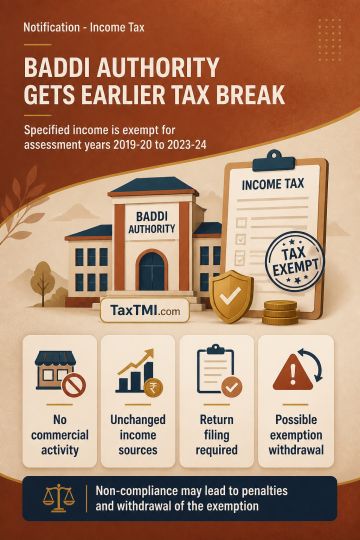
Specified income of Baddi Barotiwala Nalagarh Development Authority receives conditional tax exemption, retrospectively covering its designated assess...
Specified development authority income receives retrospective tax exemption, subject to non-commercial activity, unchanged income sources, and return-...
Unified Brand India framework introduces voluntary Trust Mark certification and funding support for export branding, packaging and global promotional ...
Origin Declaration authentication governs preferential tariff claims under India-UK CETA, requiring a validated reference number before import clearan...
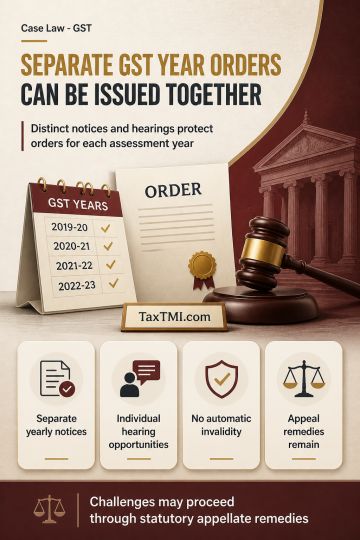
Separate assessment orders for different years remain valid when distinct notices and hearing opportunities prevent prejudice from combined proceeding...
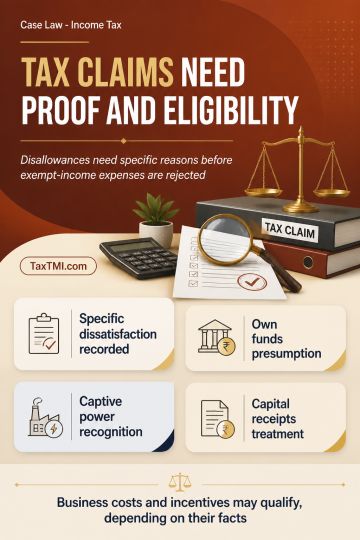
Rule 8D disallowance requires the Assessing Officer to record specific dissatisfaction, after examining the taxpayer's working, before indirect expenditure relating to exempt income can be disallowed; general observations on investments are insufficient. Where own interest-free funds cover exempt-income investments, a presumption applies that those investments were made from such funds, preventing interest disallowance. Eligible captive power undertakings may compute profits on a standalone basis, use regulated industrial tariffs as an internal comparable for captive electricity, and claim investment allowance when capital work-in-progress is installed and commissioned during the year. Corporate advertising, lease equalisation charges and employee stock-option costs may qualify as revenue expenditure. Subsidies linked to technology-upgradation investment are capital receipts, while scheme-based incentives require factual examination.
Rule 8D disallowance requires the Assessing Officer to record specific dissatisfaction, after examining the taxpayer's working, before indirect expenditure relating to exempt income can be disallowed; general observations on investments are insufficient. Where own interest-free funds cover exempt-income investments, a presumption applies that those investments were made from such funds, preventing interest disallowance. Eligible captive power undertakings may compute profits on a standalone basis, use regulated industrial tariffs as an internal comparable for captive electricity, and claim investment allowance when capital work-in-progress is installed and commissioned during the year. Corporate advertising, lease equalisation charges and employee stock-option costs may qualify as revenue expenditure. Subsidies linked to technology-upgradation investment are capital receipts, while scheme-based incentives require factual examination.
Note: It is a system-generated summary and is for quick reference only.
 TaxTMI
 of 4801










 Join Channel


 TaxTMI