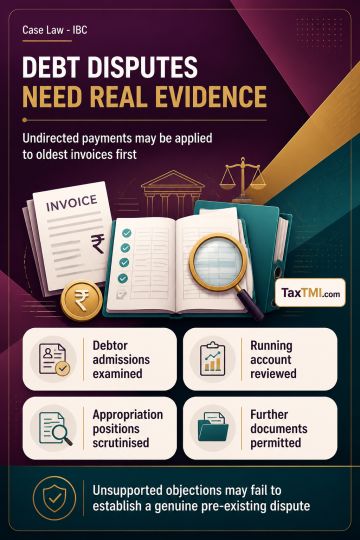
Pre-existing operational debt disputes require genuine evidence, while undirected running-account payments may be appropriated on a first-in-first-out...
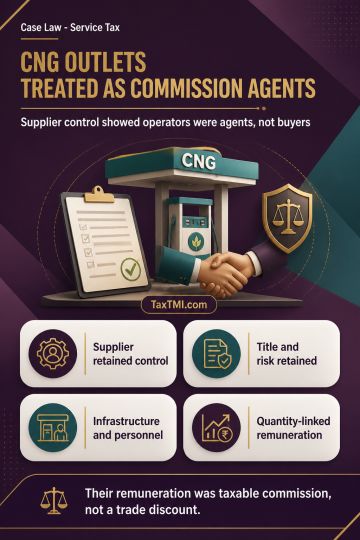
Agency in CNG distribution makes outlet operators commission agents, rendering taxable Business Auxiliary Service rather than purchasing goods for res...
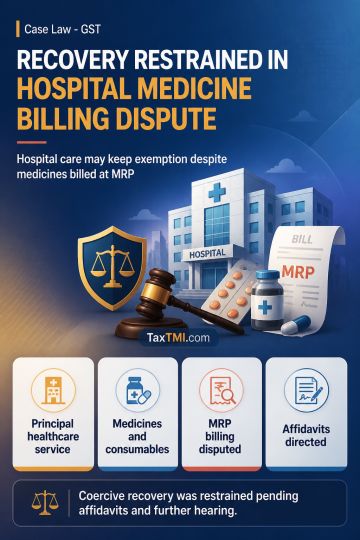
Composite inpatient healthcare supply may retain exemption despite MRP medicine billing, while separate taxable sale characterisation remains disputed...
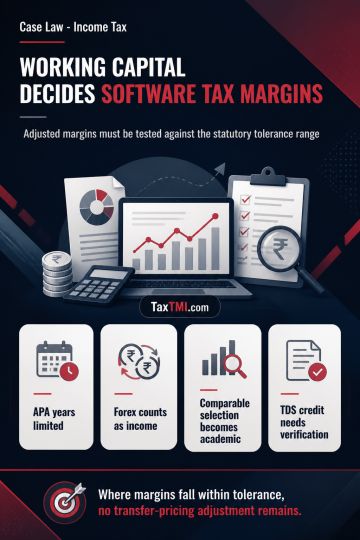
Working-capital adjustment determines whether software-services transfer-pricing margins fall within the statutory tolerance range, eliminating any ad...
Page of 4798
Press 'Enter' after typing page number.
921 to 940 of 95957 Results
❮
❯
❯❯
0 / 200
Expand Note
Add to Folder
No Folders have been created
+
Are you sure you want to delete "My most important" ?
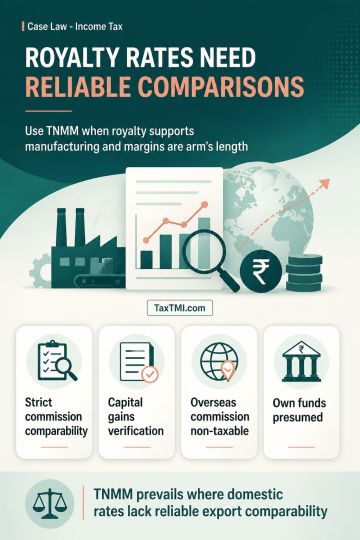
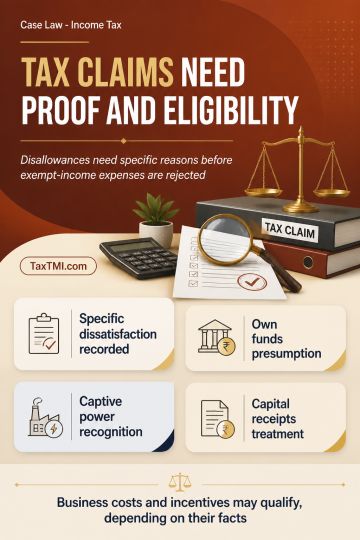
Rule 8D disallowance requires the Assessing Officer to record specific dissatisfaction, after examining the taxpayer's working, before indirect expenditure relating to exempt income can be disallowed; general observations on investments are insufficient. Where own interest-free funds cover exempt-income investments, a presumption applies that those investments were made from such funds, preventing interest disallowance. Eligible captive power undertakings may compute profits on a standalone basis, use regulated industrial tariffs as an internal comparable for captive electricity, and claim investment allowance when capital work-in-progress is installed and commissioned during the year. Corporate advertising, lease equalisation charges and employee stock-option costs may qualify as revenue expenditure. Subsidies linked to technology-upgradation investment are capital receipts, while scheme-based incentives require factual examination.
Rule 8D disallowance requires the Assessing Officer to record specific dissatisfaction, after examining the taxpayer's working, before indirect expenditure relating to exempt income can be disallowed; general observations on investments are insufficient. Where own interest-free funds cover exempt-income investments, a presumption applies that those investments were made from such funds, preventing interest disallowance. Eligible captive power undertakings may compute profits on a standalone basis, use regulated industrial tariffs as an internal comparable for captive electricity, and claim investment allowance when capital work-in-progress is installed and commissioned during the year. Corporate advertising, lease equalisation charges and employee stock-option costs may qualify as revenue expenditure. Subsidies linked to technology-upgradation investment are capital receipts, while scheme-based incentives require factual examination.
Note: It is a system-generated summary and is for quick reference only.
 TaxTMI
 of 4798






 Join Channel


 TaxTMI