Tax exemption for regulatory authority income applies retrospectively, subject to non-commercial activity, unchanged income sources, and return filing...
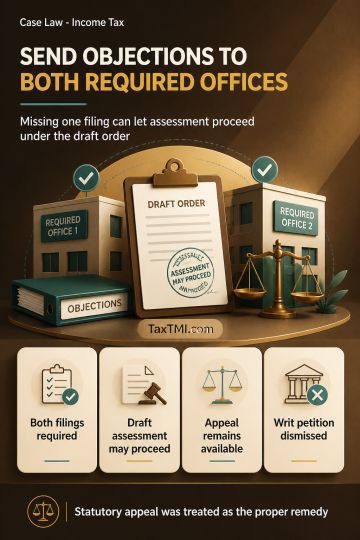
Dispute Resolution Panel objections must reach both prescribed forums; otherwise assessment may proceed and statutory appeal remains the proper remedy...
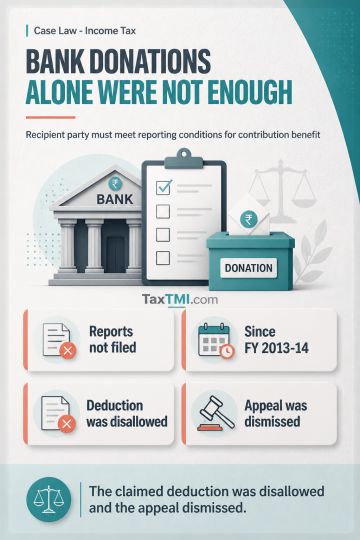
Political contribution deductions require recipient party compliance with contribution-reporting conditions; banking-channel donations alone do not qu...
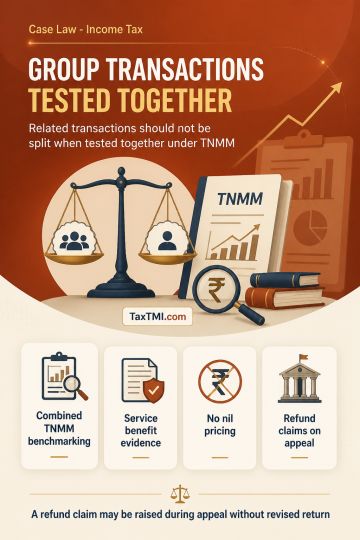
Aggregation under TNMM prevents selective testing of intra-group services without comparable uncontrolled transactions, while appellate additional cla...
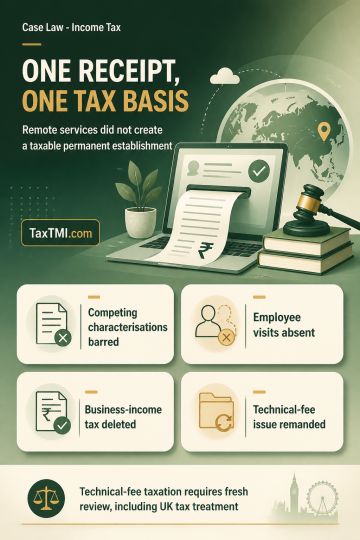
Protective assessment cannot duplicate identical receipts under competing characterisations; remote services did not establish a taxable permanent est...
Page of 4792
Press 'Enter' after typing page number.
461 to 480 of 95833 Results
❮
❯
❯❯
0 / 200
Expand Note
Add to Folder
No Folders have been created
+
Are you sure you want to delete "My most important" ?
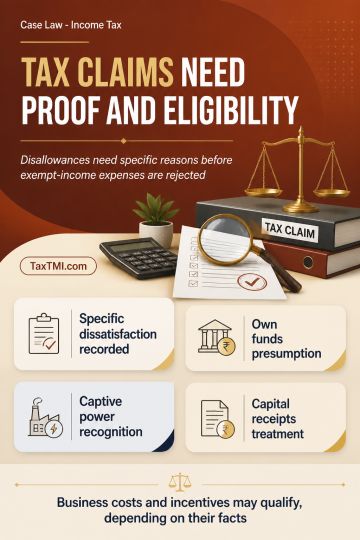
Rule 8D disallowance requires the Assessing Officer to record specific dissatisfaction, after examining the taxpayer's working, before indirect expenditure relating to exempt income can be disallowed; general observations on investments are insufficient. Where own interest-free funds cover exempt-income investments, a presumption applies that those investments were made from such funds, preventing interest disallowance. Eligible captive power undertakings may compute profits on a standalone basis, use regulated industrial tariffs as an internal comparable for captive electricity, and claim investment allowance when capital work-in-progress is installed and commissioned during the year. Corporate advertising, lease equalisation charges and employee stock-option costs may qualify as revenue expenditure. Subsidies linked to technology-upgradation investment are capital receipts, while scheme-based incentives require factual examination.
Rule 8D disallowance requires the Assessing Officer to record specific dissatisfaction, after examining the taxpayer's working, before indirect expenditure relating to exempt income can be disallowed; general observations on investments are insufficient. Where own interest-free funds cover exempt-income investments, a presumption applies that those investments were made from such funds, preventing interest disallowance. Eligible captive power undertakings may compute profits on a standalone basis, use regulated industrial tariffs as an internal comparable for captive electricity, and claim investment allowance when capital work-in-progress is installed and commissioned during the year. Corporate advertising, lease equalisation charges and employee stock-option costs may qualify as revenue expenditure. Subsidies linked to technology-upgradation investment are capital receipts, while scheme-based incentives require factual examination.
Note: It is a system-generated summary and is for quick reference only.
 TaxTMI
 of 4792






 Join Channel


 TaxTMI