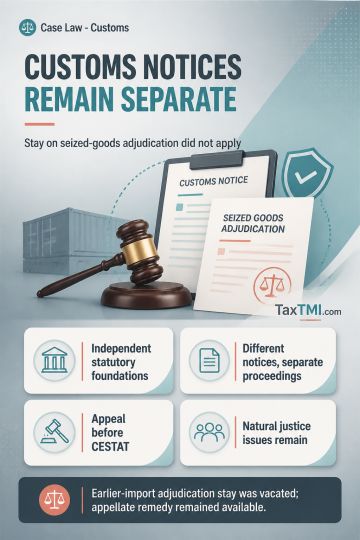
Independent show-cause notices remain separate proceedings, while customs adjudication challenges should ordinarily follow the statutory appellate rem...
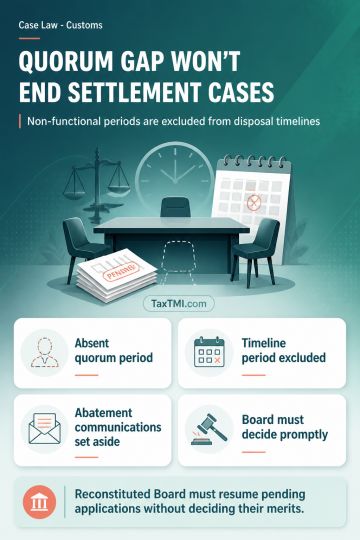
Institutional incapacity in customs settlement proceedings excludes non-functional quorum periods from statutory disposal timelines, preventing automa...
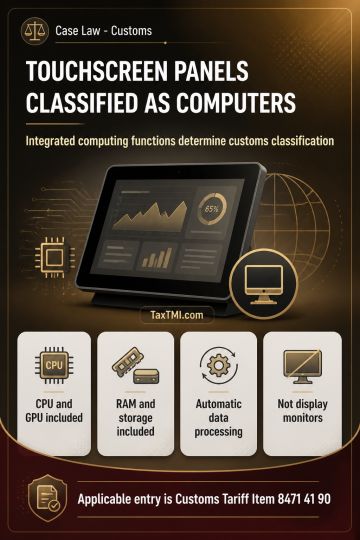
Interactive touchscreen panels with integrated computing functions fall under automatic data-processing machines rather than display monitors for cust...
Ex parte injunction service requirements were substantially met, while civil recovery and SFIO investigation into provident fund defalcation continued...
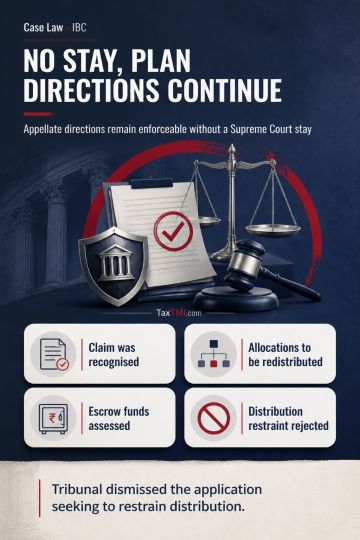
Enforcement of resolution-plan directions continues without a Supreme Court stay, preventing suspension of redistribution and escrowed-fund distributi...
Third-party ownership claims over attached property require Special Court adjudication where purchasers lack registered sale deeds and bona fides rema...
Pure-agent reimbursements in clearing and forwarding services are excluded from taxable value when qualifying third-party payments are properly record...
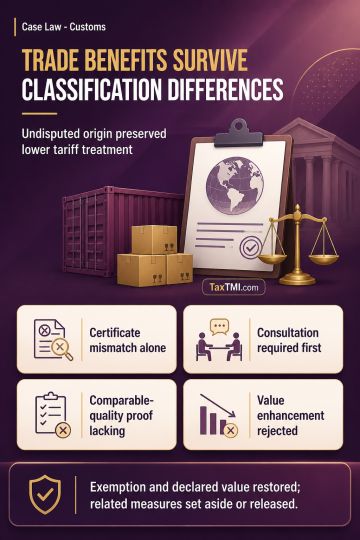
SAFTA preferential tariff treatment could not be denied solely because the six-digit tariff classification in the country-of-origin certificate differed from the re-determined classification. Where the goods' description and Bangladeshi origin were undisputed, the revised headings remained covered by the exemption, and no specified ground for denial was established, the applicable origin rules required verification and consultation before rejecting preference. Transaction value could not be enhanced merely using NIDB data for allegedly similar branded goods without evidence of counterfeit goods, invoice unreliability, comparable quality or other relevant textile characteristics. The preferential exemption and declared value were restored, with consequential duty, interest, penalty, confiscation, redemption fine and bank guarantee measures set aside or released.
SAFTA preferential tariff treatment could not be denied solely because the six-digit tariff classification in the country-of-origin certificate differed from the re-determined classification. Where the goods' description and Bangladeshi origin were undisputed, the revised headings remained covered by the exemption, and no specified ground for denial was established, the applicable origin rules required verification and consultation before rejecting preference. Transaction value could not be enhanced merely using NIDB data for allegedly similar branded goods without evidence of counterfeit goods, invoice unreliability, comparable quality or other relevant textile characteristics. The preferential exemption and declared value were restored, with consequential duty, interest, penalty, confiscation, redemption fine and bank guarantee measures set aside or released.
Note: It is a system-generated summary and is for quick reference only.
 TaxTMI
 of 4786













 Join Channel


 TaxTMI
