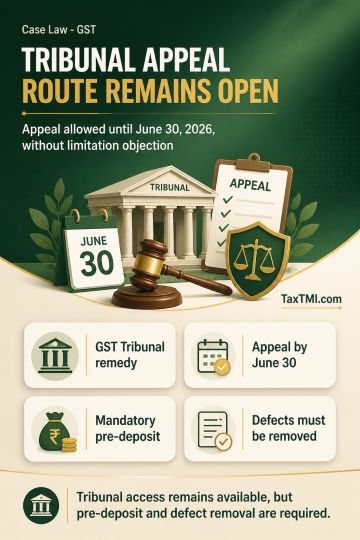
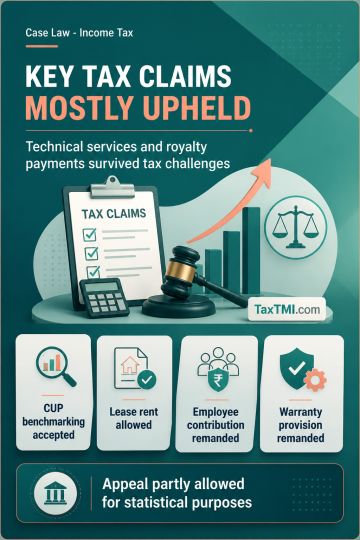
Transfer pricing and tax deductions upheld on established principles, while employee contributions and warranty provisions returned for fresh examinat...
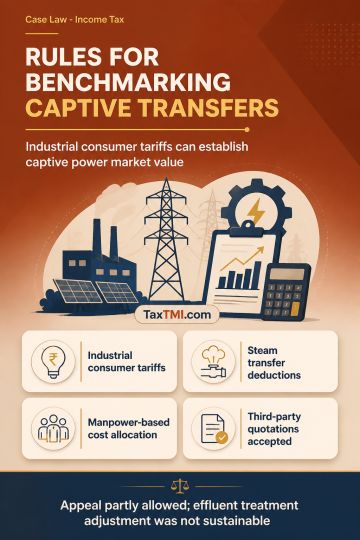
Captive transfer pricing relies on industrial consumer tariffs, while genuine quotations can benchmark effluent treatment transfers under the Other Me...
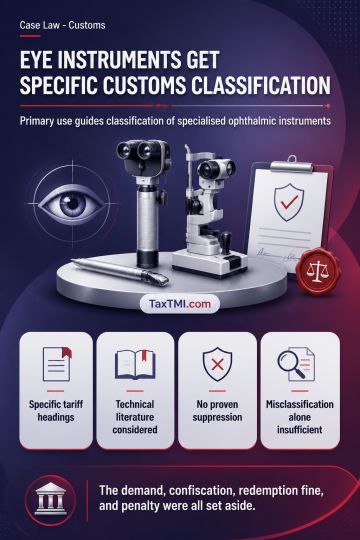
Specific tariff classification for ophthalmic instruments and extended limitation principles determine the treatment of duty demands, confiscation, an...
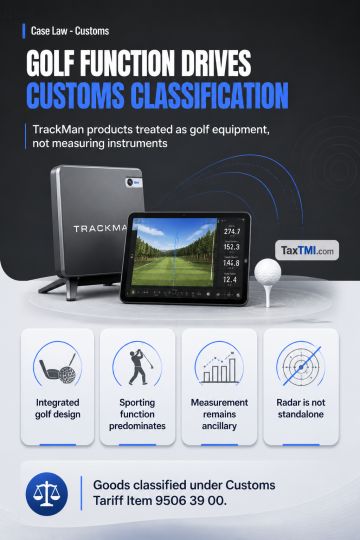
Integrated golf function determines classification, placing launch monitors and simulators under other golf equipment rather than measuring instrument...
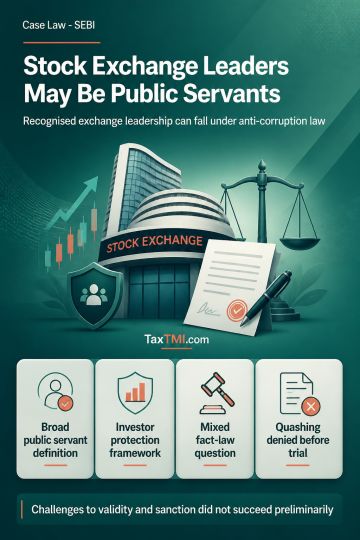
Public servant status under anti-corruption law extends to recognised stock exchange leadership; constitutional and sanction challenges do not succeed...
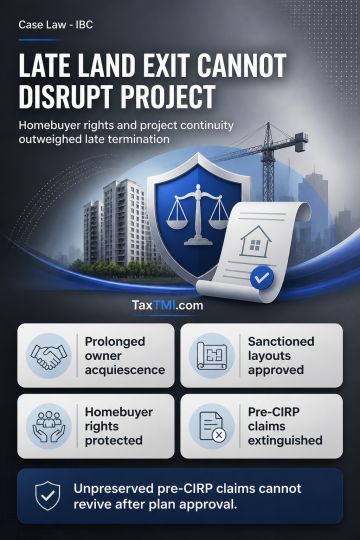
Acquiescence, homebuyer protection and clean-slate resolution principles prevent landowners from disrupting an integrated project through late termina...
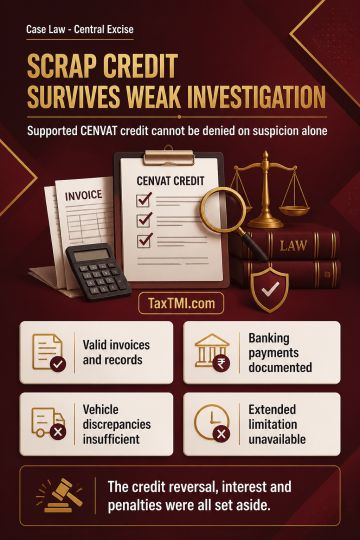
CENVAT credit on MS scrap received under registered dealer invoices was admissible where valid invoices, banking payments, statutory records, transport-service tax and evidence of consumption supported receipt, while manufacture and clearance of finished goods remained undisputed. The Revenue had to prove non-receipt through affirmative evidence and identify an alternative raw-material source; suspicion and incomplete investigation were insufficient. Uncorroborated, contradictory investigation statements could not sustain denial without compliance with Section 9D safeguards. Limited Vahan portal vehicle discrepancies, without examination of vehicle owners or independent evidence, could not establish fictitious transactions. Extended limitation was unavailable because statutory returns and records disclosed the credit and no fraud, collusion, wilful misstatement or suppression with intent to evade duty was proved. Credit reversal, interest and penalties were set aside.
CENVAT credit on MS scrap received under registered dealer invoices was admissible where valid invoices, banking payments, statutory records, transport-service tax and evidence of consumption supported receipt, while manufacture and clearance of finished goods remained undisputed. The Revenue had to prove non-receipt through affirmative evidence and identify an alternative raw-material source; suspicion and incomplete investigation were insufficient. Uncorroborated, contradictory investigation statements could not sustain denial without compliance with Section 9D safeguards. Limited Vahan portal vehicle discrepancies, without examination of vehicle owners or independent evidence, could not establish fictitious transactions. Extended limitation was unavailable because statutory returns and records disclosed the credit and no fraud, collusion, wilful misstatement or suppression with intent to evade duty was proved. Credit reversal, interest and penalties were set aside.
Note: It is a system-generated summary and is for quick reference only.
 TaxTMI
 of 4803



 Join Channel


 TaxTMI