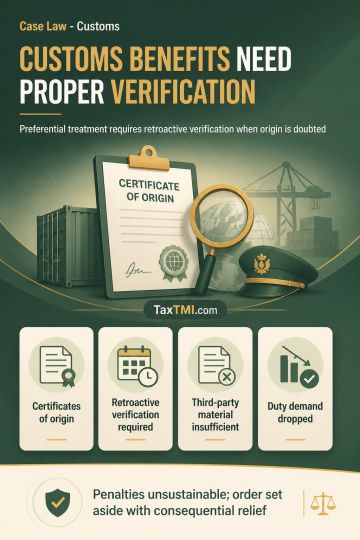
Certificate-of-origin verification procedure governs preferential customs benefits; denial without retroactive verification was set aside with consequ...
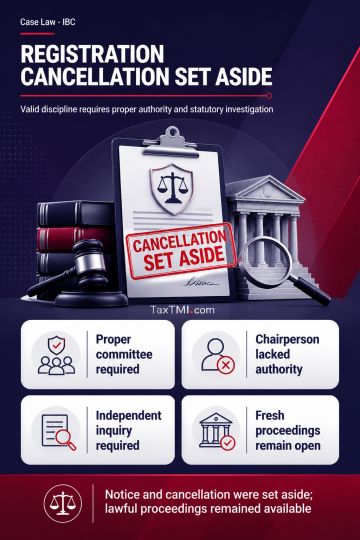
Disciplinary Committee jurisdiction and mandatory investigation requirements invalidated cancellation of an insolvency professional's registration and...
Retention of seized property survives where recorded reasons support proceeds of crime, while stayed investigation periods are excluded from limitatio...
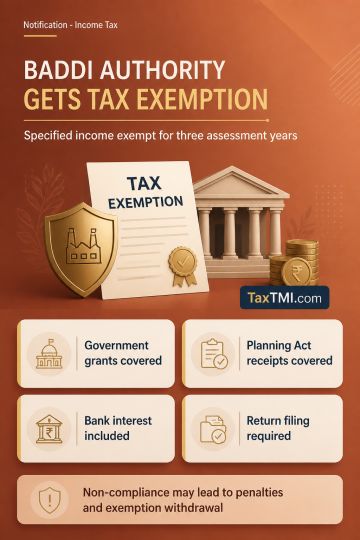
Specified income of Baddi Barotiwala Nalagarh Development Authority receives conditional tax exemption, retrospectively covering its designated assess...
Specified development authority income receives retrospective tax exemption, subject to non-commercial activity, unchanged income sources, and return-...
Unified Brand India framework introduces voluntary Trust Mark certification and funding support for export branding, packaging and global promotional ...
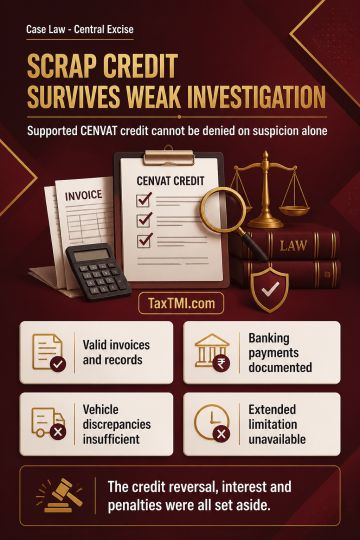
CENVAT credit on MS scrap received under registered dealer invoices was admissible where valid invoices, banking payments, statutory records, transport-service tax and evidence of consumption supported receipt, while manufacture and clearance of finished goods remained undisputed. The Revenue had to prove non-receipt through affirmative evidence and identify an alternative raw-material source; suspicion and incomplete investigation were insufficient. Uncorroborated, contradictory investigation statements could not sustain denial without compliance with Section 9D safeguards. Limited Vahan portal vehicle discrepancies, without examination of vehicle owners or independent evidence, could not establish fictitious transactions. Extended limitation was unavailable because statutory returns and records disclosed the credit and no fraud, collusion, wilful misstatement or suppression with intent to evade duty was proved. Credit reversal, interest and penalties were set aside.
CENVAT credit on MS scrap received under registered dealer invoices was admissible where valid invoices, banking payments, statutory records, transport-service tax and evidence of consumption supported receipt, while manufacture and clearance of finished goods remained undisputed. The Revenue had to prove non-receipt through affirmative evidence and identify an alternative raw-material source; suspicion and incomplete investigation were insufficient. Uncorroborated, contradictory investigation statements could not sustain denial without compliance with Section 9D safeguards. Limited Vahan portal vehicle discrepancies, without examination of vehicle owners or independent evidence, could not establish fictitious transactions. Extended limitation was unavailable because statutory returns and records disclosed the credit and no fraud, collusion, wilful misstatement or suppression with intent to evade duty was proved. Credit reversal, interest and penalties were set aside.
Note: It is a system-generated summary and is for quick reference only.
 TaxTMI
 of 4803











 Join Channel


 TaxTMI

