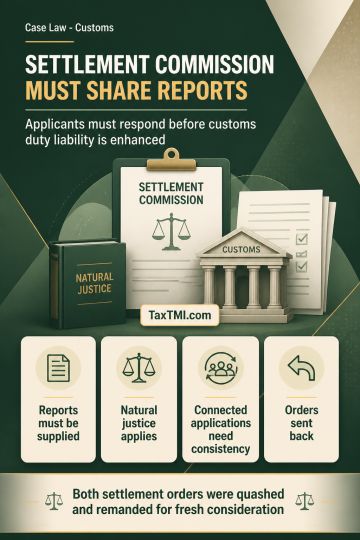
Opportunity to respond to jurisdictional reports is mandatory before customs settlement duty enhancement; connected applications require consistent ad...
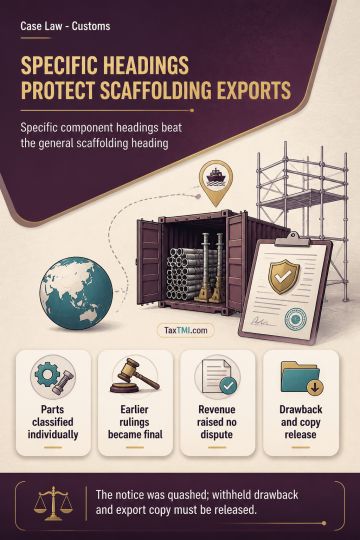
Specific customs headings for scaffolding components prevail over general classification, invalidating misclassification proceedings and enabling with...
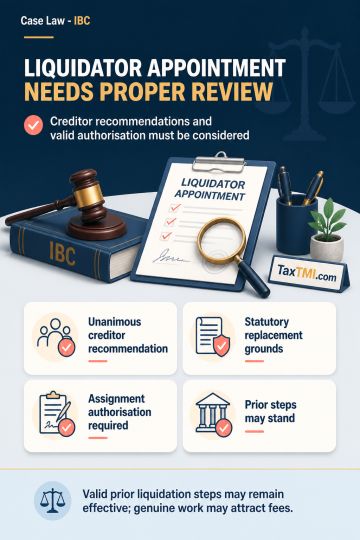
Liquidator appointment under Section 34 requires consideration of creditor recommendations, valid professional authorisation, and preservation of vali...
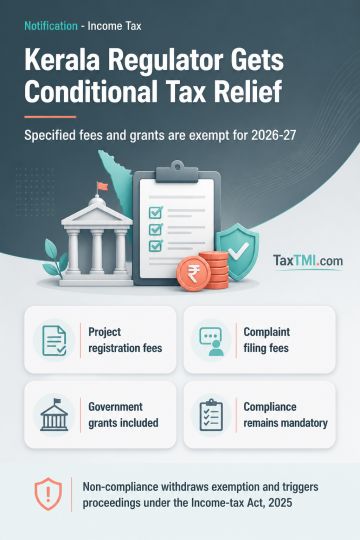
Income-tax exemption for specified regulatory fees and government grants applies subject to non-commercial activity and continuing compliance conditio...
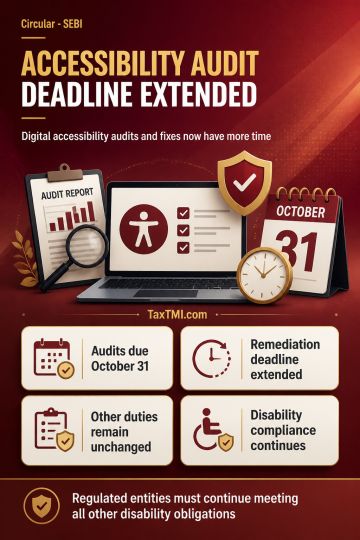
Digital accessibility audit and remediation deadlines extended, while all other disability-compliance obligations for regulated entities remain unchan...
Page of 4792
Press 'Enter' after typing page number.
421 to 440 of 95836 Results
❮
❯
❯❯
0 / 200
Expand Note
Add to Folder
No Folders have been created
+
Are you sure you want to delete "My most important" ?
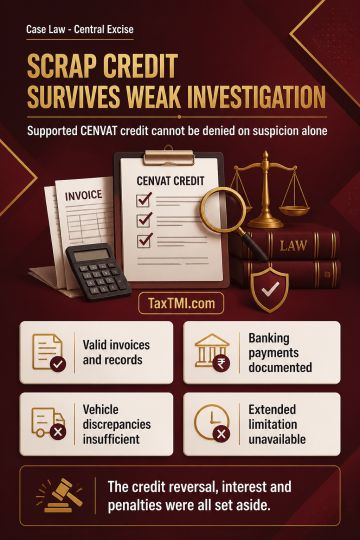
CENVAT credit on MS scrap received under registered dealer invoices was admissible where valid invoices, banking payments, statutory records, transport-service tax and evidence of consumption supported receipt, while manufacture and clearance of finished goods remained undisputed. The Revenue had to prove non-receipt through affirmative evidence and identify an alternative raw-material source; suspicion and incomplete investigation were insufficient. Uncorroborated, contradictory investigation statements could not sustain denial without compliance with Section 9D safeguards. Limited Vahan portal vehicle discrepancies, without examination of vehicle owners or independent evidence, could not establish fictitious transactions. Extended limitation was unavailable because statutory returns and records disclosed the credit and no fraud, collusion, wilful misstatement or suppression with intent to evade duty was proved. Credit reversal, interest and penalties were set aside.
CENVAT credit on MS scrap received under registered dealer invoices was admissible where valid invoices, banking payments, statutory records, transport-service tax and evidence of consumption supported receipt, while manufacture and clearance of finished goods remained undisputed. The Revenue had to prove non-receipt through affirmative evidence and identify an alternative raw-material source; suspicion and incomplete investigation were insufficient. Uncorroborated, contradictory investigation statements could not sustain denial without compliance with Section 9D safeguards. Limited Vahan portal vehicle discrepancies, without examination of vehicle owners or independent evidence, could not establish fictitious transactions. Extended limitation was unavailable because statutory returns and records disclosed the credit and no fraud, collusion, wilful misstatement or suppression with intent to evade duty was proved. Credit reversal, interest and penalties were set aside.
Note: It is a system-generated summary and is for quick reference only.
 TaxTMI
 of 4792



 Join Channel


 TaxTMI