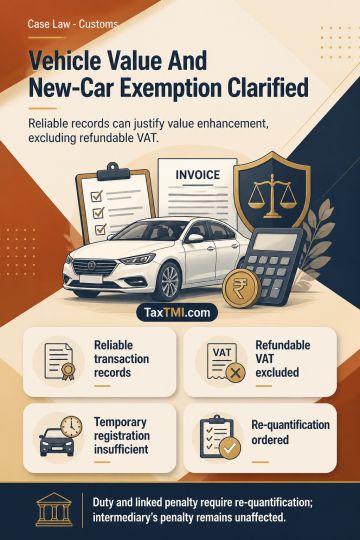
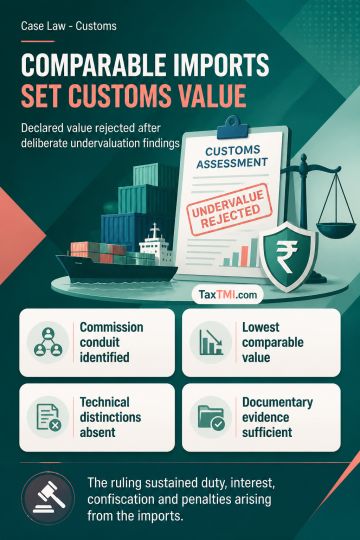
Transaction value rejection requires reliable corroboration; refundable VAT is excluded and temporary registration does not defeat new-vehicle exempti...
Appellate jurisdiction remains available where a wrist-worn gold ornament cannot conclusively be characterised as imported baggage at the preliminary ...
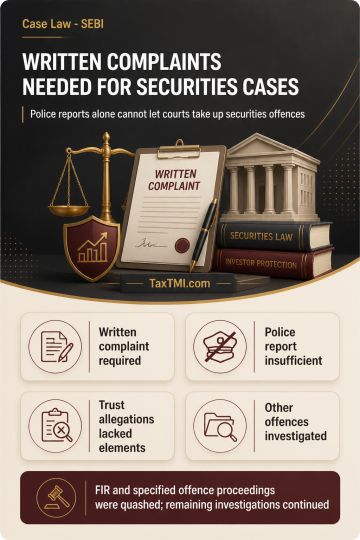
Written complaint requirement bars cognizance on police reports for securities offences, while unsupported breach of trust and cheating allegations fa...
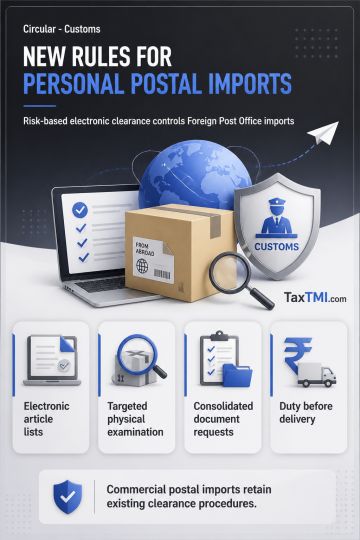
Risk-based postal import clearance standardises electronic assessment, document requests, duty realisation and delivery controls at Foreign Post Offic...
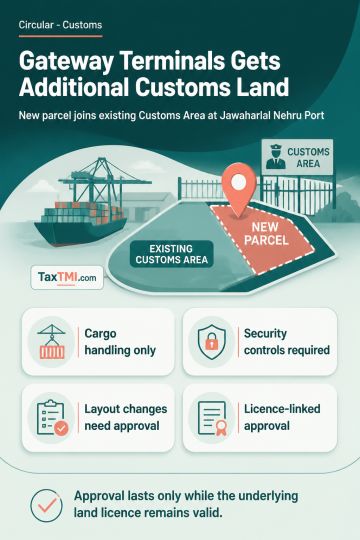
Customs Cargo Service Provider appointment extends custodianship to additional terminal land, subject to cargo-control, security and licence condition...
The SOP for movement and cross-stuffing of International...
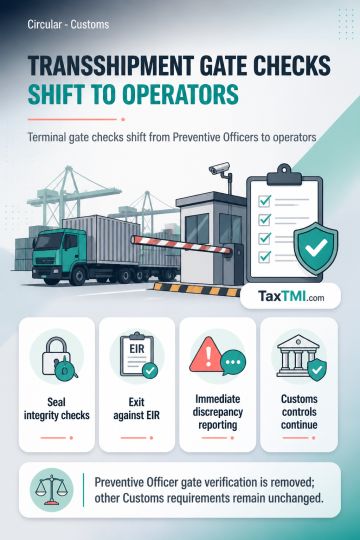
Terminal gate verification for transshipment containers shifts to operators, while Customs controls and discrepancy reporting requirements remain mandatory.
Contents
Summary
Note
Bookmark
Share
✓ Copied successfully !
Print
Print Options
For full text, please login
Login to TaxTMI
Verification Pending
The Email Id has not been verified. Click on the link we have sent on
The SOP for movement and cross-stuffing of International Transshipment-FCL containers between Port Terminals and designated CFSs now requires the Port Terminal Operator to verify container numbers and seal integrity before permitting terminal exit or entry; exit verification must be undertaken against the EIR copy. Physical verification by the Preventive Officer at terminal gates is dispensed with to reduce congestion, while Customs control continues through the Custodian-cum-Carrier Bond under HCCAR, 2009. Any container-number or seal discrepancy found during transit or upon arrival must be immediately reported to the jurisdictional AC/DC, and further processing requires the proper officer's permission. All other Customs checks and statutory requirements continue unchanged, with immediate effect.
The SOP for movement and cross-stuffing of International Transshipment-FCL containers between Port Terminals and designated CFSs now requires the Port Terminal Operator to verify container numbers and seal integrity before permitting terminal exit or entry; exit verification must be undertaken against the EIR copy. Physical verification by the Preventive Officer at terminal gates is dispensed with to reduce congestion, while Customs control continues through the Custodian-cum-Carrier Bond under HCCAR, 2009. Any container-number or seal discrepancy found during transit or upon arrival must be immediately reported to the jurisdictional AC/DC, and further processing requires the proper officer's permission. All other Customs checks and statutory requirements continue unchanged, with immediate effect.
Note: It is a system-generated summary and is for quick reference only.
 TaxTMI
 of 4784








 Join Channel


 TaxTMI