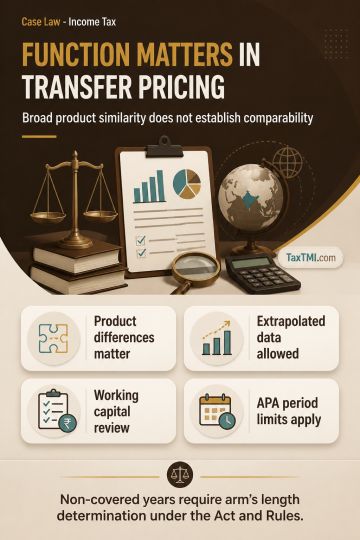
Transfer pricing comparability requires functional alignment and permits working capital adjustment, while APA margins cannot govern non-covered years...
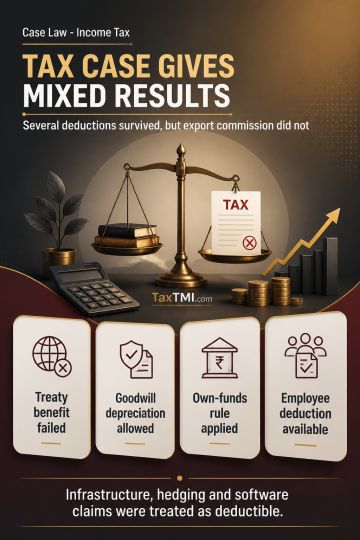
Treaty benefit, goodwill depreciation and hedging costs: export commission disallowed, while key business deductions and depreciation claims succeeded...
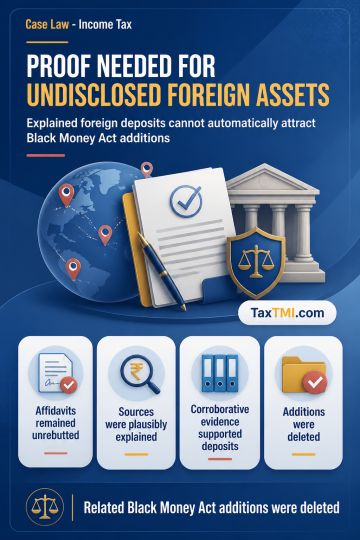
Undisclosed foreign asset classification requires an unexplained source; unrebutted affidavits and corroborative evidence defeated the Black Money Act...
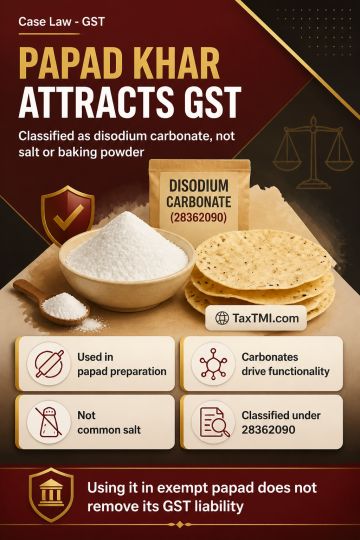
Papad Khar, an alkaline mixture of sodium chloride, sodium carbonate and sodium bicarbonate used in papad and snack preparation, is classified as other disodium carbonate under sub-heading 28362090. Its manufacture by mixing and processing prevents classification as common or rock salt under heading 2501, while its composition and culinary function distinguish it from yeast or prepared baking powder under heading 2102. Sodium chloride serves principally as a diluent or carrier, whereas the carbonates and bicarbonates provide the functional properties. As an inorganic chemical, Papad Khar attracts GST at 18%. The GST exemption for papad does not extend to Papad Khar merely because it is used as an input in manufacturing exempt papad.
Papad Khar, an alkaline mixture of sodium chloride, sodium carbonate and sodium bicarbonate used in papad and snack preparation, is classified as other disodium carbonate under sub-heading 28362090. Its manufacture by mixing and processing prevents classification as common or rock salt under heading 2501, while its composition and culinary function distinguish it from yeast or prepared baking powder under heading 2102. Sodium chloride serves principally as a diluent or carrier, whereas the carbonates and bicarbonates provide the functional properties. As an inorganic chemical, Papad Khar attracts GST at 18%. The GST exemption for papad does not extend to Papad Khar merely because it is used as an input in manufacturing exempt papad.
Note: It is a system-generated summary and is for quick reference only.
 TaxTMI
 of 4800





 Join Channel


 TaxTMI
