Minimum alternate tax exclusions for pre-amendment banking companies and expatriate Indian branch salaries remain outside head office expenditure limi...
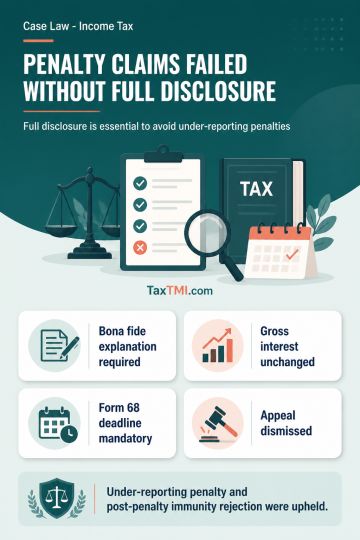
Bona fide disclosure requirements govern under-reporting penalties, and post-penalty immunity applications cannot secure available statutory protectio...
Certificate-of-origin verification procedure governs preferential customs benefits; denial without retroactive verification was set aside with consequ...
Disciplinary Committee jurisdiction and mandatory investigation requirements invalidated cancellation of an insolvency professional's registration and...
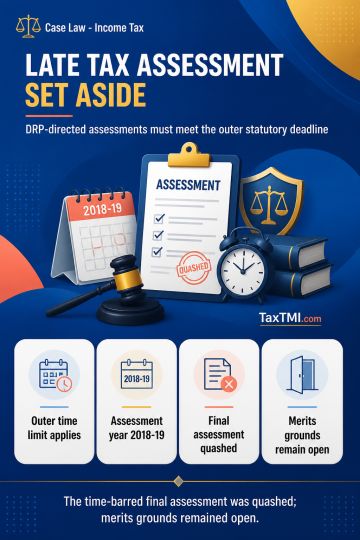
Sections 144C and 153 require harmonious construction when determining limitation for a final assessment made pursuant to DRP directions. The non-obstante clause in section 144C(13) does not displace the outer time limit under section 153; the final assessment must therefore be completed within that prescribed limitation period. Applying the binding High Court precedent, the ITAT treated the final assessment for Assessment Year 2018-19 as time-barred and quashed it. Merits grounds remained open, with liberty to seek revival if a Supreme Court decision requires modification.
Sections 144C and 153 require harmonious construction when determining limitation for a final assessment made pursuant to DRP directions. The non-obstante clause in section 144C(13) does not displace the outer time limit under section 153; the final assessment must therefore be completed within that prescribed limitation period. Applying the binding High Court precedent, the ITAT treated the final assessment for Assessment Year 2018-19 as time-barred and quashed it. Merits grounds remained open, with liberty to seek revival if a Supreme Court decision requires modification.
Note: It is a system-generated summary and is for quick reference only.
 TaxTMI
 of 4801












 Join Channel


 TaxTMI