Clean slate principle extinguishes uncrystallised operational claims and bars continuation of pending recovery and arbitral proceedings after plan app...
Works contract classification governs composite layout-development contracts where VAT-paid goods are transferred alongside construction and infrastru...
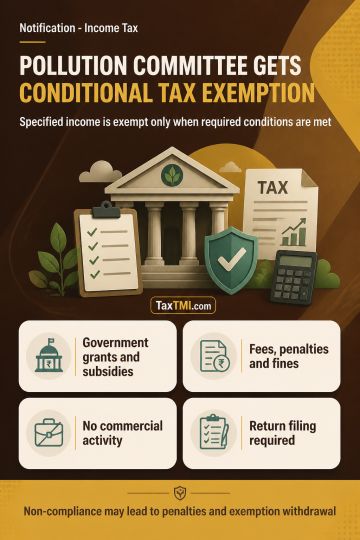
Specified income tax exemption for pollution control body remains conditional on non-commercial activity, unchanged income character, and return filin...
Jurisdictional facts in certificate-of-origin discrepancies can support customs show-cause proceedings, leaving factual explanations for departmental ...
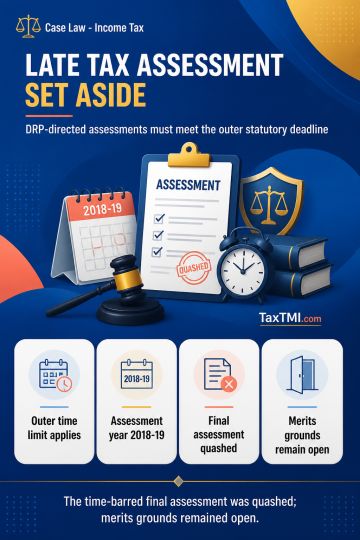
Sections 144C and 153 require harmonious construction when determining limitation for a final assessment made pursuant to DRP directions. The non-obstante clause in section 144C(13) does not displace the outer time limit under section 153; the final assessment must therefore be completed within that prescribed limitation period. Applying the binding High Court precedent, the ITAT treated the final assessment for Assessment Year 2018-19 as time-barred and quashed it. Merits grounds remained open, with liberty to seek revival if a Supreme Court decision requires modification.
Sections 144C and 153 require harmonious construction when determining limitation for a final assessment made pursuant to DRP directions. The non-obstante clause in section 144C(13) does not displace the outer time limit under section 153; the final assessment must therefore be completed within that prescribed limitation period. Applying the binding High Court precedent, the ITAT treated the final assessment for Assessment Year 2018-19 as time-barred and quashed it. Merits grounds remained open, with liberty to seek revival if a Supreme Court decision requires modification.
Note: It is a system-generated summary and is for quick reference only.
 TaxTMI
 of 4796















 Join Channel


 TaxTMI