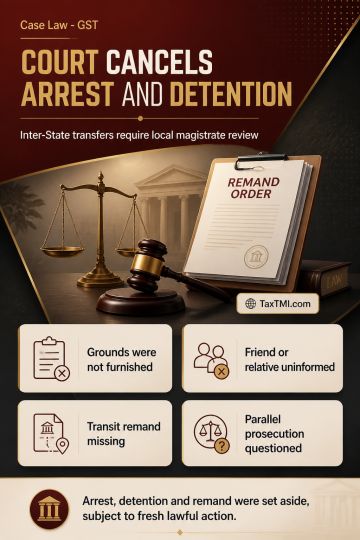
Arrest safeguards and transit remand requirements invalidated detention following inter-State transfer without communicated grounds or magistrate auth...
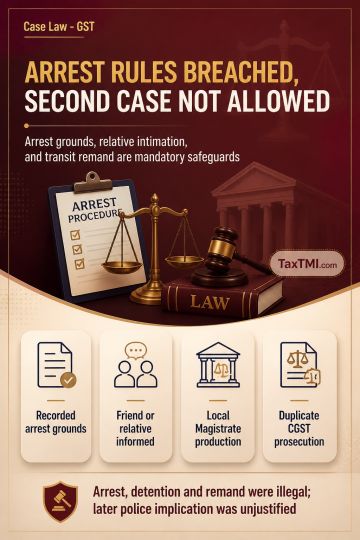
Arrest safeguards require disclosed grounds, relative intimation and transit remand, while duplicate prosecution under the CGST framework is unsustain...
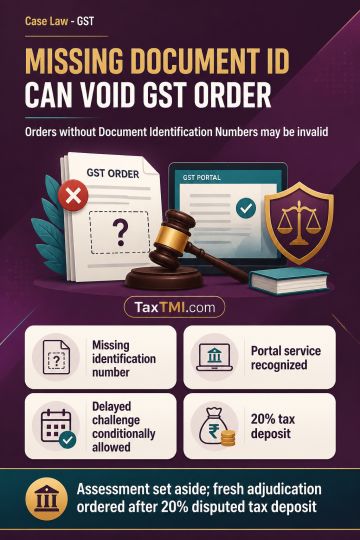
Document Identification Number defects can invalidate GST assessments, with delayed challenges entertained conditionally where patent irregularities e...
Windmill commissioning evidence supported higher depreciation where grid connection and electricity generation proved operational use before the relev...
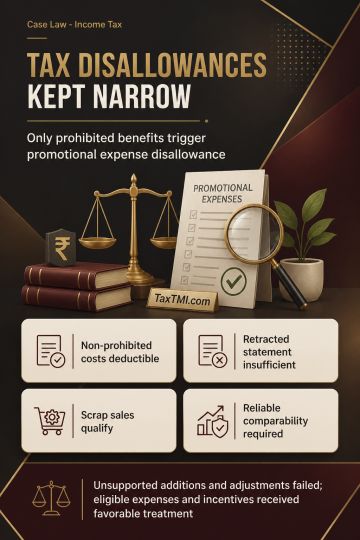
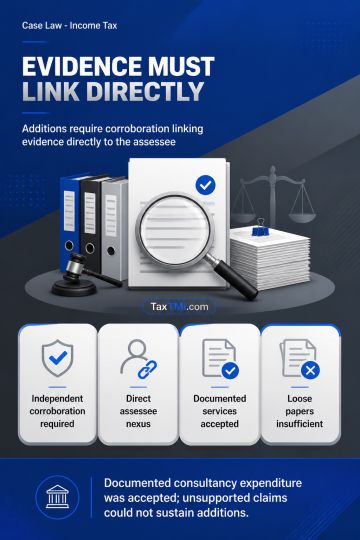
Pharmaceutical promotion and transfer-pricing comparability principles limited disallowances, while uncorroborated search allegations and unsupported ...
Business expenditure substantiation supports scrap credits, statutory payments and expense claims, while depreciation requires proof of actual busines...
Page of 4794
Press 'Enter' after typing page number.
621 to 640 of 95875 Results
❮
❯
❯❯
0 / 200
Expand Note
Add to Folder
No Folders have been created
+
Are you sure you want to delete "My most important" ?
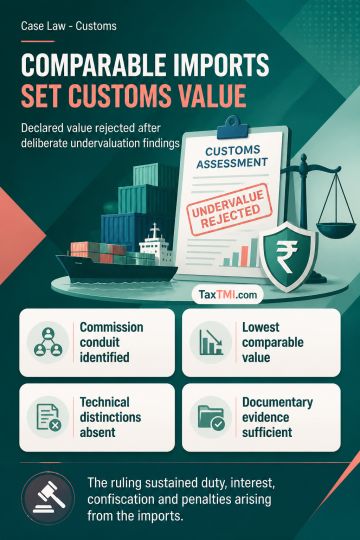
Declared transaction value for imported Main PCB Boards was rejected where the importer functioned as a commission conduit, imports were arranged through the overseas supplier, and goods were immediately supplied to the domestic beneficiary. Customs value was redetermined using the lowest contemporaneous value of comparable goods from the same country, period and quantities; absence of declared technical distinctions prevented a challenge to comparability. Duty, interest and confiscation followed the finding of suppression and undervaluation. Penalties for misdeclaration and abetment were sustained against persons involved in arranging, facilitating and benefiting from the imports. Cross-examination was treated as unnecessary where liability rested on documentary evidence and voluntary admissions rather than investigating officers' statements.
Declared transaction value for imported Main PCB Boards was rejected where the importer functioned as a commission conduit, imports were arranged through the overseas supplier, and goods were immediately supplied to the domestic beneficiary. Customs value was redetermined using the lowest contemporaneous value of comparable goods from the same country, period and quantities; absence of declared technical distinctions prevented a challenge to comparability. Duty, interest and confiscation followed the finding of suppression and undervaluation. Penalties for misdeclaration and abetment were sustained against persons involved in arranging, facilitating and benefiting from the imports. Cross-examination was treated as unnecessary where liability rested on documentary evidence and voluntary admissions rather than investigating officers' statements.
Note: It is a system-generated summary and is for quick reference only.
 TaxTMI
 of 4794










 Join Channel


 TaxTMI