Prolonged sterilisation of development rights supports capital-gains treatment, while business-income disallowances cannot govern capital-gains comput...
Additional evidence in transfer pricing dispute leads to fresh examination, while tax deductions, TDS credit, fee and refund interest require verifica...
Category II AIF pass-through taxation preserves non-business income character; investment receipts cannot be reclassified without applying recognised ...
Mutual fund maturity rules require proper rollover, redemption, disclosure, and due diligence; investor gains cannot excuse regulatory breaches or pen...
Threshold exemption excludes exempt services, while stamp-paper purchases avoid reverse charge; consequential service tax penalties were also set asid...
A uniform, technology-driven procedure governs clearance of...
Risk-based postal import clearance standardises electronic assessment, document requests, duty realisation and delivery controls at Foreign Post Offices.
Contents
Summary
Note
Bookmark
Share
✓ Copied successfully !
Print
Print Options
For full text, please login
Login to TaxTMI
Verification Pending
The Email Id has not been verified. Click on the link we have sent on
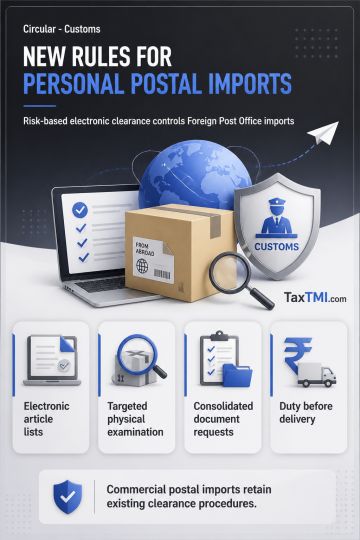
A uniform, technology-driven procedure governs clearance of personal imported goods through Foreign Post Offices under the Postal Import Regulations, 2025. Postal authorities must electronically present article lists and goods on arrival; customs assessment is risk-based through the FPO Import Application and Risk Management System, with physical examination generally limited to selected or intelligence-based cases. Officers may issue specific consolidated electronic document-call letters and, after 30 days without an adequate response, assess using available records under the Customs Act. Clearance is issued electronically after assessment and customs formalities, and postal authorities must not deliver articles before clearance and duty payment or realisation. Commercial postal imports remain subject to the existing procedure.
A uniform, technology-driven procedure governs clearance of personal imported goods through Foreign Post Offices under the Postal Import Regulations, 2025. Postal authorities must electronically present article lists and goods on arrival; customs assessment is risk-based through the FPO Import Application and Risk Management System, with physical examination generally limited to selected or intelligence-based cases. Officers may issue specific consolidated electronic document-call letters and, after 30 days without an adequate response, assess using available records under the Customs Act. Clearance is issued electronically after assessment and customs formalities, and postal authorities must not deliver articles before clearance and duty payment or realisation. Commercial postal imports remain subject to the existing procedure.
Note: It is a system-generated summary and is for quick reference only.
 TaxTMI
 of 4805






















 Join Channel


 TaxTMI
