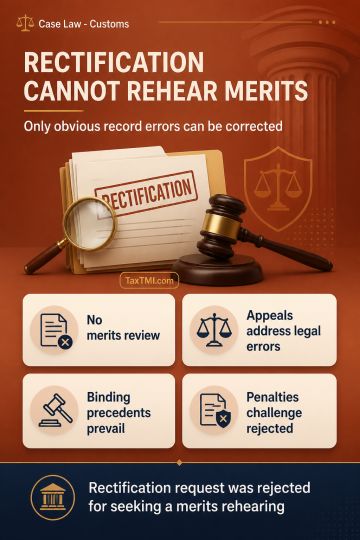
Rectification of mistake remains limited to self-evident record errors, preventing merits review through miscellaneous applications and preserving fin...
Tender creditworthiness conditions may extend to de facto Promoter Directors, with post-participation challenges generally barred absent arbitrariness...
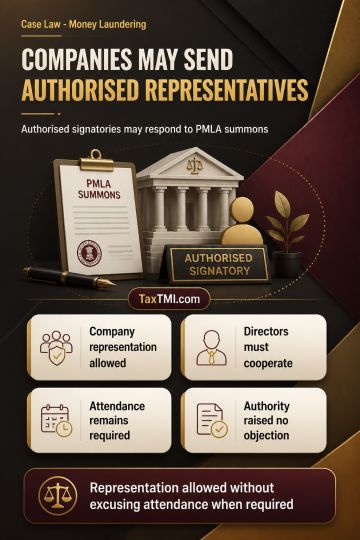
Corporate representation in PMLA summons proceedings permitted through an authorised signatory, subject to directors' continuing cooperation and atten...
Helicopter charter classification requires effective control analysis, while territorial performance, reasoned credit orders and wilful suppression de...
A uniform, technology-driven procedure governs clearance of...
Risk-based postal import clearance standardises electronic assessment, document requests, duty realisation and delivery controls at Foreign Post Offices.
Contents
Summary
Note
Bookmark
Share
✓ Copied successfully !
Print
Print Options
For full text, please login
Login to TaxTMI
Verification Pending
The Email Id has not been verified. Click on the link we have sent on
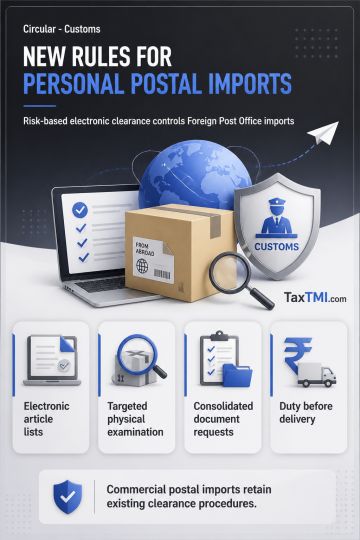
A uniform, technology-driven procedure governs clearance of personal imported goods through Foreign Post Offices under the Postal Import Regulations, 2025. Postal authorities must electronically present article lists and goods on arrival; customs assessment is risk-based through the FPO Import Application and Risk Management System, with physical examination generally limited to selected or intelligence-based cases. Officers may issue specific consolidated electronic document-call letters and, after 30 days without an adequate response, assess using available records under the Customs Act. Clearance is issued electronically after assessment and customs formalities, and postal authorities must not deliver articles before clearance and duty payment or realisation. Commercial postal imports remain subject to the existing procedure.
A uniform, technology-driven procedure governs clearance of personal imported goods through Foreign Post Offices under the Postal Import Regulations, 2025. Postal authorities must electronically present article lists and goods on arrival; customs assessment is risk-based through the FPO Import Application and Risk Management System, with physical examination generally limited to selected or intelligence-based cases. Officers may issue specific consolidated electronic document-call letters and, after 30 days without an adequate response, assess using available records under the Customs Act. Clearance is issued electronically after assessment and customs formalities, and postal authorities must not deliver articles before clearance and duty payment or realisation. Commercial postal imports remain subject to the existing procedure.
Note: It is a system-generated summary and is for quick reference only.
 TaxTMI
 of 4796











 Join Channel


 TaxTMI