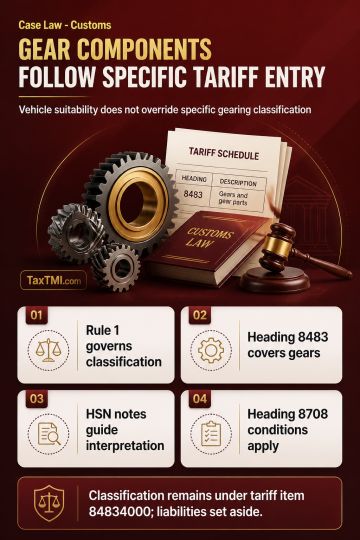
Tariff classification of vehicle gear components follows the specific gearing entry, displacing motor-vehicle parts classification and related liabili...
Necessary-party requirements limit impleadment of independent entities, while deferred consideration does not create an appealable adverse determinati...
Food supplement classification requires common parlance and authoritative tests, preventing treatment as proprietary Ayurvedic medicines without suppo...
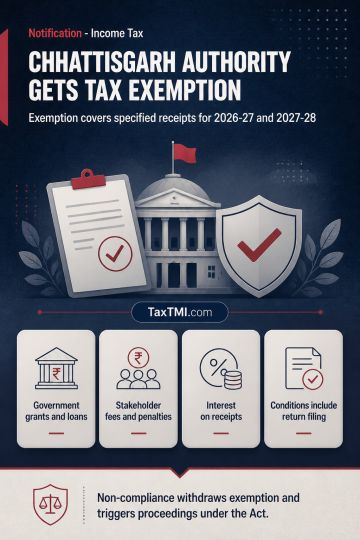
Specified regulatory authority income receives conditional tax exemption, subject to non-commercial activity, unchanged income character, and return f...
Tax exemption for regulatory authority income applies retrospectively, subject to non-commercial activity, unchanged income sources, and return-filing...
Separate customs show-cause notices arising from the same...
Independent show-cause notices remain separate proceedings, while customs adjudication challenges should ordinarily follow the statutory appellate remedy.
Contents
Summary
Note
Bookmark
Share
✓ Copied successfully !
Print
Print Options
For full text, please login
Login to TaxTMI
Verification Pending
The Email Id has not been verified. Click on the link we have sent on
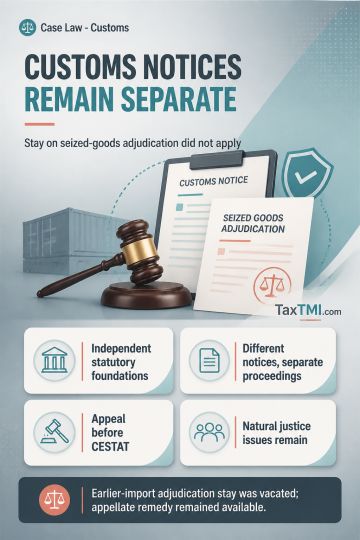
Separate customs show-cause notices arising from the same investigation retain independent statutory foundations and do not merge merely because they are assigned to one adjudicating authority or heard together. An interim stay confined to proceedings under the notice relating to earlier imports therefore did not bar adjudication under the distinct notice concerning seized goods. Challenges alleging non-supply of relied-upon documents, inadequate hearing and prejudice required examination of the adjudication record and were left to the effective statutory appellate remedy before CESTAT. The interim stay on adjudication of the earlier-import notice was vacated; limitation, Call Book treatment and extension issues remained open, subject to an effective hearing and compliance with natural justice.
Separate customs show-cause notices arising from the same investigation retain independent statutory foundations and do not merge merely because they are assigned to one adjudicating authority or heard together. An interim stay confined to proceedings under the notice relating to earlier imports therefore did not bar adjudication under the distinct notice concerning seized goods. Challenges alleging non-supply of relied-upon documents, inadequate hearing and prejudice required examination of the adjudication record and were left to the effective statutory appellate remedy before CESTAT. The interim stay on adjudication of the earlier-import notice was vacated; limitation, Call Book treatment and extension issues remained open, subject to an effective hearing and compliance with natural justice.
Note: It is a system-generated summary and is for quick reference only.
 TaxTMI
 of 4782
















 Join Channel


 TaxTMI
