Origin Declaration authentication governs preferential tariff claims under India-UK CETA, requiring a validated reference number before import clearan...
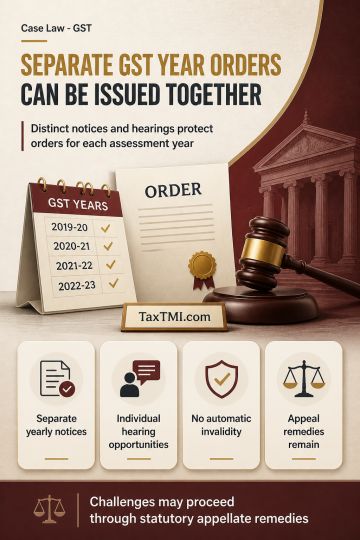
Separate assessment orders for different years remain valid when distinct notices and hearing opportunities prevent prejudice from combined proceeding...
Defined public benefit can retain charitable character; registration renewal requires examining genuine activities and legal compliance, not surplus a...
Capital reduction is distinct from share buy-back, preventing buy-back tax; restructuring interest and related business deductions also survive scruti...
Substantial compliance with Order XXXIX Rule 3 CPC was found...
Ex parte injunction service requirements were substantially met, while civil recovery and SFIO investigation into provident fund defalcation continued.
Contents
Summary
Note
Bookmark
Share
✓ Copied successfully !
Print
Print Options
For full text, please login
Login to TaxTMI
Verification Pending
The Email Id has not been verified. Click on the link we have sent on
Substantial compliance with Order XXXIX Rule 3 CPC was found where defendants received the injunction application and plaint, relevant annexures were available, and service occurred before the returnable date, enabling an effective response; the interim injunction therefore continued. The exempted establishment had a prima facie civil claim over alleged provident fund trust defalcation, and statutory provident fund inquiry powers did not exclude civil court jurisdiction. Non-disclosure of a contemplated complaint and later FIR was not material suppression because it would not have affected interim relief; parallel civil and criminal proceedings could continue. The High Court could direct an SFIO investigation where the alleged diversion concerned company affairs, multiple units, and social-security funds.
Substantial compliance with Order XXXIX Rule 3 CPC was found where defendants received the injunction application and plaint, relevant annexures were available, and service occurred before the returnable date, enabling an effective response; the interim injunction therefore continued. The exempted establishment had a prima facie civil claim over alleged provident fund trust defalcation, and statutory provident fund inquiry powers did not exclude civil court jurisdiction. Non-disclosure of a contemplated complaint and later FIR was not material suppression because it would not have affected interim relief; parallel civil and criminal proceedings could continue. The High Court could direct an SFIO investigation where the alleged diversion concerned company affairs, multiple units, and social-security funds.
Note: It is a system-generated summary and is for quick reference only.
 TaxTMI
  TaxTMI
 of 4821
















 Join Channel