Customs relief for Strait of Hormuz maritime disruptions remains available, with existing conditions continuing unchanged through the extended validit...
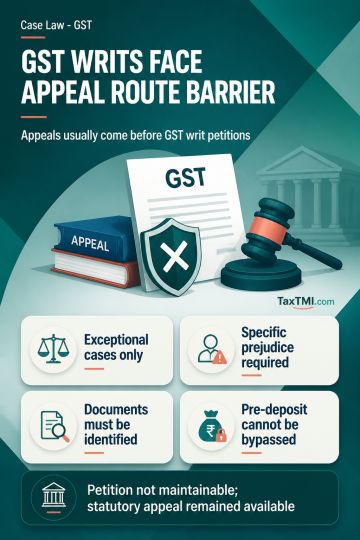
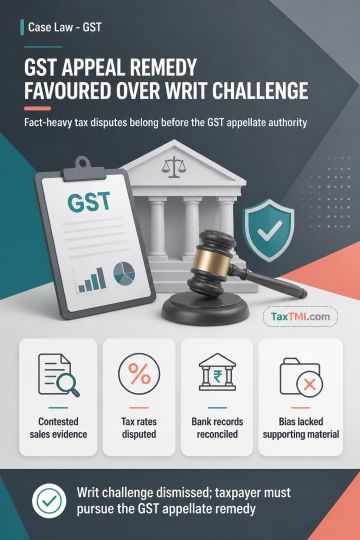
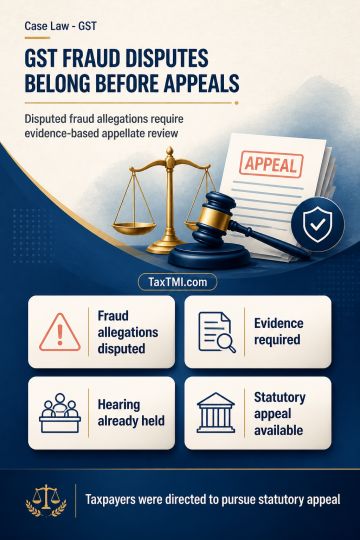
GST writ jurisdiction ordinarily does not displace the statutory appellate remedy where a demand dispute requires examination of contested evidence. The text identifies alleged suppressed sales, applicable tax rates, and reconciliation of bank deposits, returns and seized records as factual matters unsuitable for determination under Article 226. It further distinguishes cases involving pure questions of law. Authorisation of an inspection is described as distinct from adjudicatory functions; without material establishing bias, an officer's later appellate role does not itself demonstrate denial of natural justice, lack of authority or jurisdictional error. The stated result is that the writ challenge was dismissed, leaving the taxpayer to pursue the GST appellate remedy.
GST writ jurisdiction ordinarily does not displace the statutory appellate remedy where a demand dispute requires examination of contested evidence. The text identifies alleged suppressed sales, applicable tax rates, and reconciliation of bank deposits, returns and seized records as factual matters unsuitable for determination under Article 226. It further distinguishes cases involving pure questions of law. Authorisation of an inspection is described as distinct from adjudicatory functions; without material establishing bias, an officer's later appellate role does not itself demonstrate denial of natural justice, lack of authority or jurisdictional error. The stated result is that the writ challenge was dismissed, leaving the taxpayer to pursue the GST appellate remedy.
Note: It is a system-generated summary and is for quick reference only.
 TaxTMI






 Join Channel


 TaxTMI

