Arrest safeguards and transit remand requirements invalidated detention following inter-State transfer without communicated grounds or magistrate auth...
Arrest safeguards require disclosed grounds, relative intimation and transit remand, while duplicate prosecution under the CGST framework is unsustain...
Document Identification Number defects can invalidate GST assessments, with delayed challenges entertained conditionally where patent irregularities e...
Windmill commissioning evidence supported higher depreciation where grid connection and electricity generation proved operational use before the relev...
Pharmaceutical promotion and transfer-pricing comparability principles limited disallowances, while uncorroborated search allegations and unsupported ...
Business expenditure substantiation supports scrap credits, statutory payments and expense claims, while depreciation requires proof of actual busines...
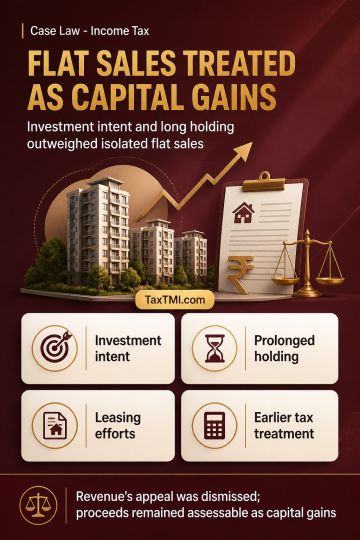
Characterisation of flat-sale proceeds depends primarily on the taxpayer's intention, determined from the totality of circumstances, including the stated objects, consistent investment treatment, period of holding, leasing efforts, absence of other projects, and lack of regular trading activity. Although book treatment is not conclusive, it is relevant. Sales over different years after unsuccessful efforts to obtain tenants did not amount to an adventure in the nature of trade. Where the Revenue had accepted capital-gains treatment in earlier years and no distinguishing facts or incriminating material existed, consistency required the same treatment. The proceeds were therefore assessable as capital gains rather than business income, and the Revenue's appeal was dismissed.
Characterisation of flat-sale proceeds depends primarily on the taxpayer's intention, determined from the totality of circumstances, including the stated objects, consistent investment treatment, period of holding, leasing efforts, absence of other projects, and lack of regular trading activity. Although book treatment is not conclusive, it is relevant. Sales over different years after unsuccessful efforts to obtain tenants did not amount to an adventure in the nature of trade. Where the Revenue had accepted capital-gains treatment in earlier years and no distinguishing facts or incriminating material existed, consistency required the same treatment. The proceeds were therefore assessable as capital gains rather than business income, and the Revenue's appeal was dismissed.
Note: It is a system-generated summary and is for quick reference only.
 TaxTMI
  TaxTMI
 of 4809





















 Join Channel