Specified regulatory authority income receives conditional tax exemption, subject to non-commercial activity, unchanged income character, and return f...
Tax exemption for regulatory authority income applies retrospectively, subject to non-commercial activity, unchanged income sources, and return-filing...
Input tax credit conditions remain constitutionally valid, with eligible recipient claims considered under GST circulars and retrospective filing dead...
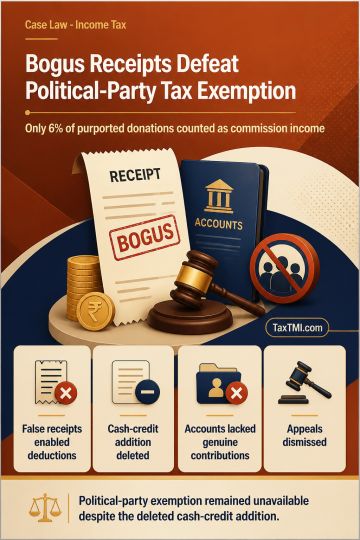
Bogus donation receipts justified commission income assessment and defeated political-party tax exemption for inaccurate accounts and reporting failur...
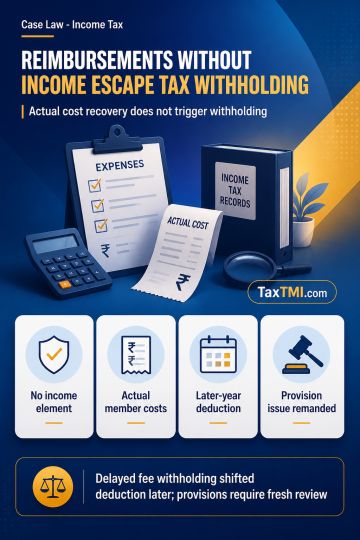
Pure reimbursement without income element escapes tax withholding, while delayed withholding and unsupported provisions face deferred or renewed scrut...
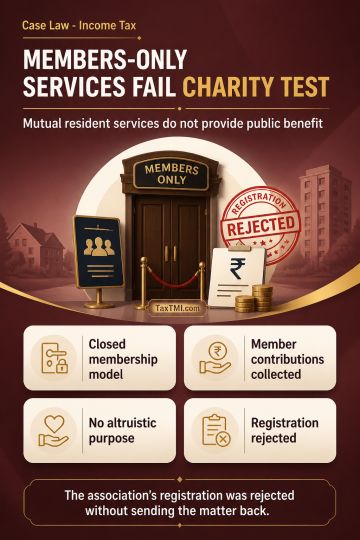
Public benefit requirement defeats charitable registration where residents' association services are reciprocal, member-only facilities governed by mu...
Page of 4787
Press 'Enter' after typing page number.
421 to 440 of 95724 Results
❮
❯
❯❯
0 / 200
Expand Note
Add to Folder
No Folders have been created
+
Are you sure you want to delete "My most important" ?
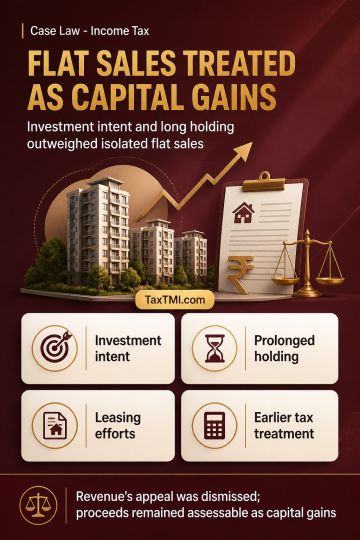
Characterisation of flat-sale proceeds depends primarily on the taxpayer's intention, determined from the totality of circumstances, including the stated objects, consistent investment treatment, period of holding, leasing efforts, absence of other projects, and lack of regular trading activity. Although book treatment is not conclusive, it is relevant. Sales over different years after unsuccessful efforts to obtain tenants did not amount to an adventure in the nature of trade. Where the Revenue had accepted capital-gains treatment in earlier years and no distinguishing facts or incriminating material existed, consistency required the same treatment. The proceeds were therefore assessable as capital gains rather than business income, and the Revenue's appeal was dismissed.
Characterisation of flat-sale proceeds depends primarily on the taxpayer's intention, determined from the totality of circumstances, including the stated objects, consistent investment treatment, period of holding, leasing efforts, absence of other projects, and lack of regular trading activity. Although book treatment is not conclusive, it is relevant. Sales over different years after unsuccessful efforts to obtain tenants did not amount to an adventure in the nature of trade. Where the Revenue had accepted capital-gains treatment in earlier years and no distinguishing facts or incriminating material existed, consistency required the same treatment. The proceeds were therefore assessable as capital gains rather than business income, and the Revenue's appeal was dismissed.
Note: It is a system-generated summary and is for quick reference only.
 TaxTMI
 of 4787














 Join Channel


 TaxTMI