Commercial vehicle depreciation, scientifically determined warranty provisions and exempt-income disallowances were resolved in favour of the taxpayer...
Inherited property sale proceeds require capital-gains treatment where ownership is supported by evidence, not suspicion or unverified signature doubt...
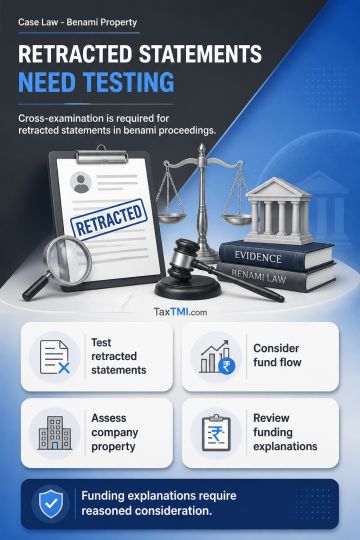
Cross-examination of retracted statements is essential where foundational evidence supports a benami allegation and documented funding explanations re...
Capital-goods exemption covers plant-modernisation accessories, while the import restriction applies only to earlier capital-goods components and spar...
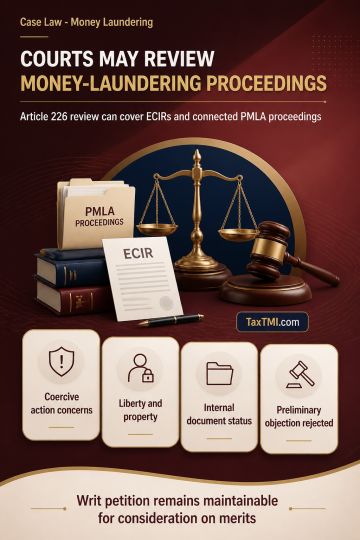
Constitutional judicial review permits challenges to ECIRs and connected money-laundering proceedings where coercive action affects fundamental intere...
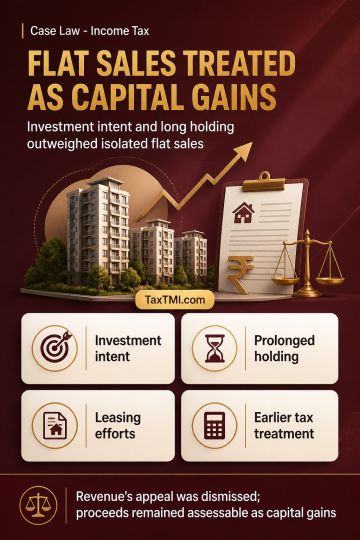
Characterisation of flat-sale proceeds depends primarily on the taxpayer's intention, determined from the totality of circumstances, including the stated objects, consistent investment treatment, period of holding, leasing efforts, absence of other projects, and lack of regular trading activity. Although book treatment is not conclusive, it is relevant. Sales over different years after unsuccessful efforts to obtain tenants did not amount to an adventure in the nature of trade. Where the Revenue had accepted capital-gains treatment in earlier years and no distinguishing facts or incriminating material existed, consistency required the same treatment. The proceeds were therefore assessable as capital gains rather than business income, and the Revenue's appeal was dismissed.
Characterisation of flat-sale proceeds depends primarily on the taxpayer's intention, determined from the totality of circumstances, including the stated objects, consistent investment treatment, period of holding, leasing efforts, absence of other projects, and lack of regular trading activity. Although book treatment is not conclusive, it is relevant. Sales over different years after unsuccessful efforts to obtain tenants did not amount to an adventure in the nature of trade. Where the Revenue had accepted capital-gains treatment in earlier years and no distinguishing facts or incriminating material existed, consistency required the same treatment. The proceeds were therefore assessable as capital gains rather than business income, and the Revenue's appeal was dismissed.
Note: It is a system-generated summary and is for quick reference only.
 TaxTMI
 of 4780












 Join Channel


 TaxTMI
