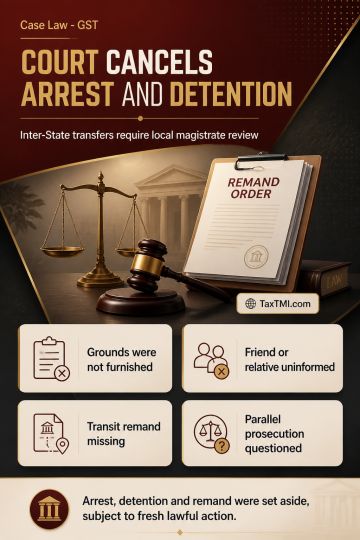
Arrest safeguards and transit remand requirements invalidated detention following inter-State transfer without communicated grounds or magistrate auth...
Arrest safeguards require disclosed grounds, relative intimation and transit remand, while duplicate prosecution under the CGST framework is unsustain...
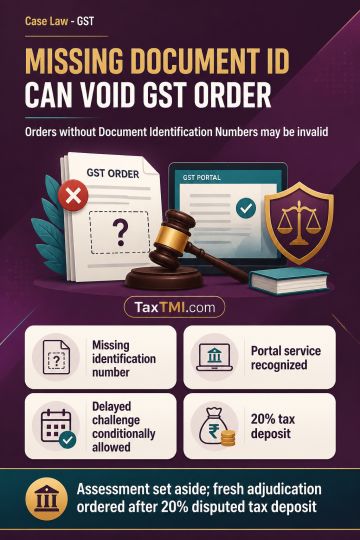
Document Identification Number defects can invalidate GST assessments, with delayed challenges entertained conditionally where patent irregularities e...
Windmill commissioning evidence supported higher depreciation where grid connection and electricity generation proved operational use before the relev...
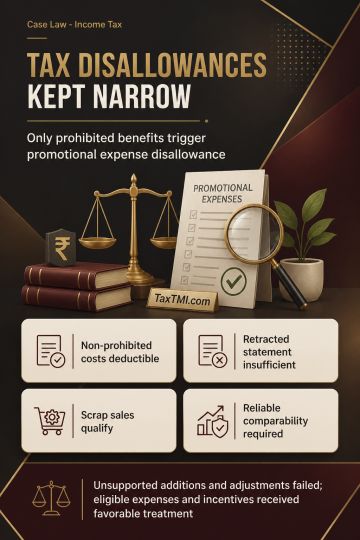
Pharmaceutical promotion and transfer-pricing comparability principles limited disallowances, while uncorroborated search allegations and unsupported ...
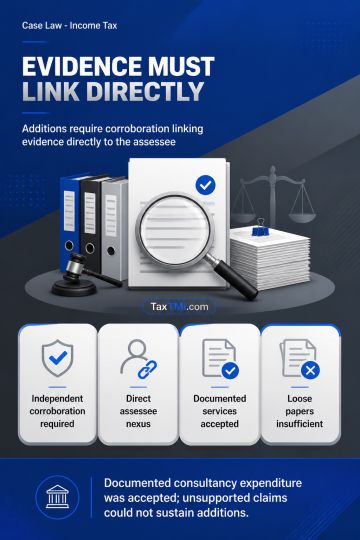
Business expenditure substantiation supports scrap credits, statutory payments and expense claims, while depreciation requires proof of actual busines...
Page of 4786
Press 'Enter' after typing page number.
461 to 480 of 95715 Results
❮
❯
❯❯
0 / 200
Expand Note
Add to Folder
No Folders have been created
+
Are you sure you want to delete "My most important" ?
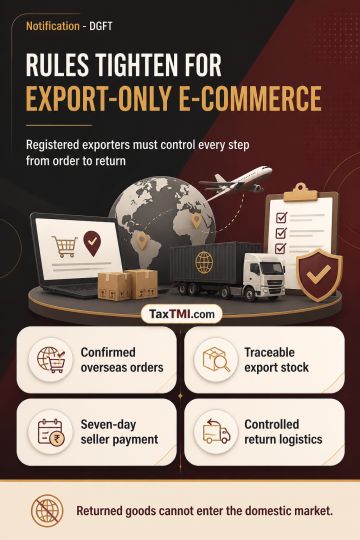
An inventory-based cross-border e-commerce export framework permits eligible non-marketplace e-commerce entities to conduct export-only inventory operations through a registered Exporter-on-Record (EOR), subject to the Foreign Trade Policy and Consolidated FDI Policy. The EOR may procure only Indian-origin goods from registered Sellers-on-Record against confirmed overseas export orders, with no speculative title transfer or inventory build-up. The EOR must segregate and digitally track export inventory, pay sellers within seven days of acceptance, claim and proportionately pass through export rebates and refunds after any administrative charge, and manage reverse logistics. Returned goods cannot enter the domestic market, and EORs should use notified export hubs where practicable.
An inventory-based cross-border e-commerce export framework permits eligible non-marketplace e-commerce entities to conduct export-only inventory operations through a registered Exporter-on-Record (EOR), subject to the Foreign Trade Policy and Consolidated FDI Policy. The EOR may procure only Indian-origin goods from registered Sellers-on-Record against confirmed overseas export orders, with no speculative title transfer or inventory build-up. The EOR must segregate and digitally track export inventory, pay sellers within seven days of acceptance, claim and proportionately pass through export rebates and refunds after any administrative charge, and manage reverse logistics. Returned goods cannot enter the domestic market, and EORs should use notified export hubs where practicable.
Note: It is a system-generated summary and is for quick reference only.
 TaxTMI
 of 4786












 Join Channel


 TaxTMI