Tax exemption for regulatory authority income applies retrospectively, subject to non-commercial activity, unchanged income sources, and return filing...
Dispute Resolution Panel objections must reach both prescribed forums; otherwise assessment may proceed and statutory appeal remains the proper remedy...
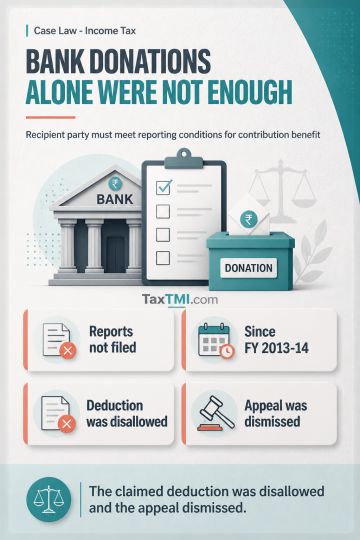
Political contribution deductions require recipient party compliance with contribution-reporting conditions; banking-channel donations alone do not qu...
Aggregation under TNMM prevents selective testing of intra-group services without comparable uncontrolled transactions, while appellate additional cla...
Protective assessment cannot duplicate identical receipts under competing characterisations; remote services did not establish a taxable permanent est...
Page of 4784
Press 'Enter' after typing page number.
301 to 320 of 95673 Results
❮
❯
❯❯
0 / 200
Expand Note
Add to Folder
No Folders have been created
+
Are you sure you want to delete "My most important" ?
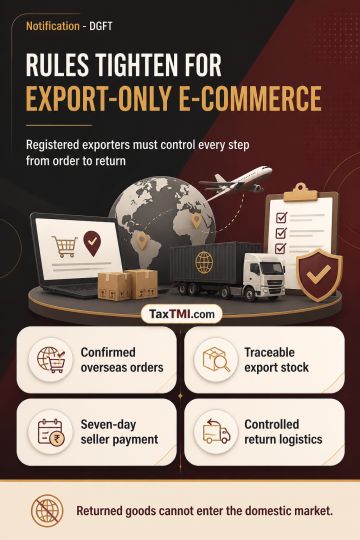
An inventory-based cross-border e-commerce export framework permits eligible non-marketplace e-commerce entities to conduct export-only inventory operations through a registered Exporter-on-Record (EOR), subject to the Foreign Trade Policy and Consolidated FDI Policy. The EOR may procure only Indian-origin goods from registered Sellers-on-Record against confirmed overseas export orders, with no speculative title transfer or inventory build-up. The EOR must segregate and digitally track export inventory, pay sellers within seven days of acceptance, claim and proportionately pass through export rebates and refunds after any administrative charge, and manage reverse logistics. Returned goods cannot enter the domestic market, and EORs should use notified export hubs where practicable.
An inventory-based cross-border e-commerce export framework permits eligible non-marketplace e-commerce entities to conduct export-only inventory operations through a registered Exporter-on-Record (EOR), subject to the Foreign Trade Policy and Consolidated FDI Policy. The EOR may procure only Indian-origin goods from registered Sellers-on-Record against confirmed overseas export orders, with no speculative title transfer or inventory build-up. The EOR must segregate and digitally track export inventory, pay sellers within seven days of acceptance, claim and proportionately pass through export rebates and refunds after any administrative charge, and manage reverse logistics. Returned goods cannot enter the domestic market, and EORs should use notified export hubs where practicable.
Note: It is a system-generated summary and is for quick reference only.
 TaxTMI
 of 4784













 Join Channel


 TaxTMI