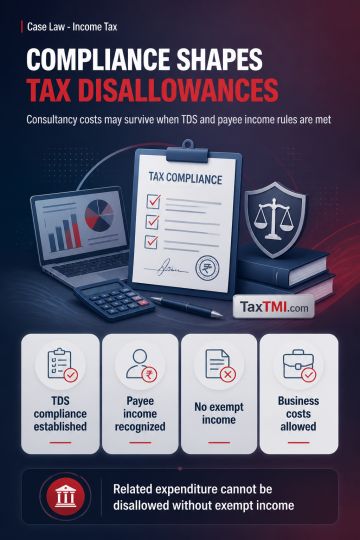
Tax deduction compliance and payee income recognition govern consultancy disallowance, while no exempt income prevents related expenditure disallowanc...
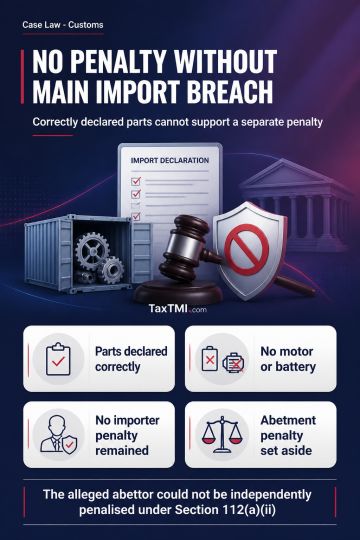
Derivative abetment liability fails when correctly declared imported components establish no underlying improper importation by the principal importer...
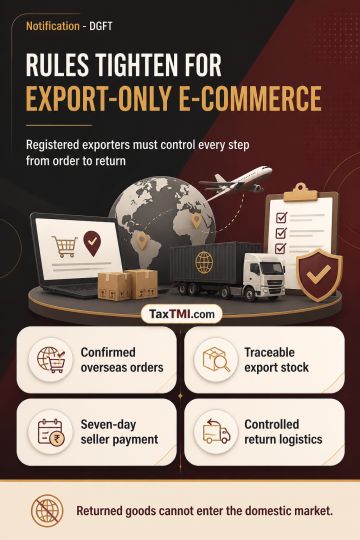
An inventory-based cross-border e-commerce export framework permits eligible non-marketplace e-commerce entities to conduct export-only inventory operations through a registered Exporter-on-Record (EOR), subject to the Foreign Trade Policy and Consolidated FDI Policy. The EOR may procure only Indian-origin goods from registered Sellers-on-Record against confirmed overseas export orders, with no speculative title transfer or inventory build-up. The EOR must segregate and digitally track export inventory, pay sellers within seven days of acceptance, claim and proportionately pass through export rebates and refunds after any administrative charge, and manage reverse logistics. Returned goods cannot enter the domestic market, and EORs should use notified export hubs where practicable.
An inventory-based cross-border e-commerce export framework permits eligible non-marketplace e-commerce entities to conduct export-only inventory operations through a registered Exporter-on-Record (EOR), subject to the Foreign Trade Policy and Consolidated FDI Policy. The EOR may procure only Indian-origin goods from registered Sellers-on-Record against confirmed overseas export orders, with no speculative title transfer or inventory build-up. The EOR must segregate and digitally track export inventory, pay sellers within seven days of acceptance, claim and proportionately pass through export rebates and refunds after any administrative charge, and manage reverse logistics. Returned goods cannot enter the domestic market, and EORs should use notified export hubs where practicable.
Note: It is a system-generated summary and is for quick reference only.
 TaxTMI
 of 4784















 Join Channel


 TaxTMI
