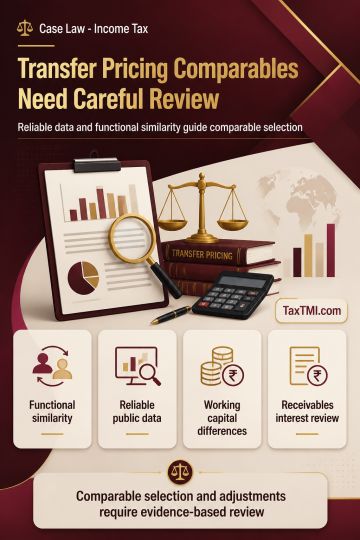
Transfer pricing comparability requires functional alignment, reliable financial data, and careful review of working capital and receivables adjustmen...
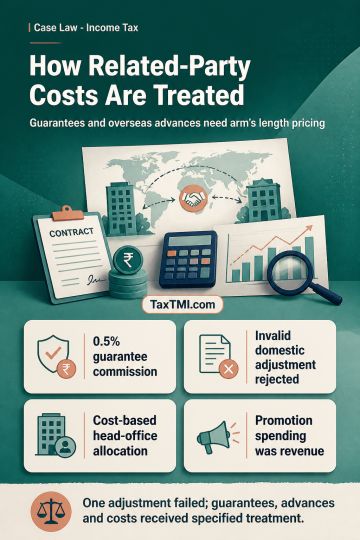
Transfer pricing rules require benchmarking corporate guarantees and associated-enterprise advances, while invalid domestic-transaction adjustments ca...
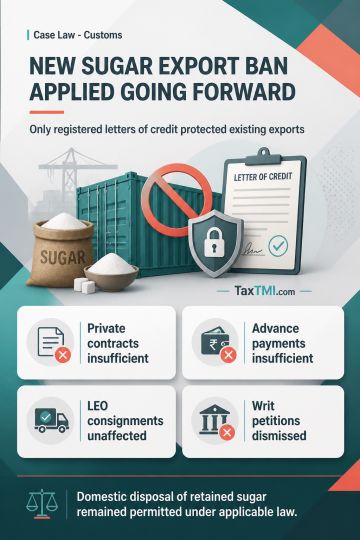
Prospective sugar export prohibition required registered letters of credit; private contracts and export quotas created no enforceable continuation ri...
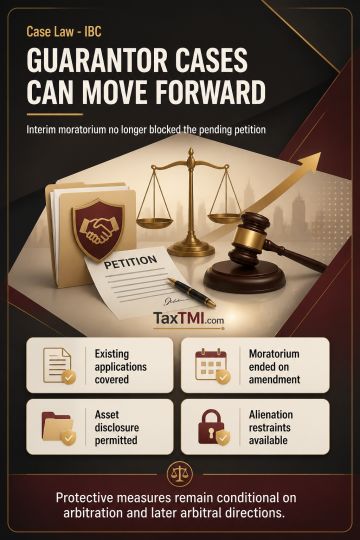
Retroactive interim-moratorium exclusion permits protective asset disclosure and preservation measures against personal guarantors pending arbitration...
CGST Zones must establish structured coordination with State...
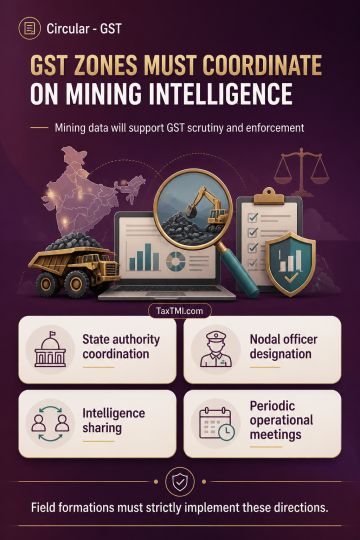
Mining-law intelligence sharing must support GST scrutiny, enforcement action, inter-agency dissemination, and periodic operational coordination across CGST Zones.
Contents
Summary
Note
Bookmark
Share
✓ Copied successfully !
Print
Print Options
For full text, please login
Login to TaxTMI
Verification Pending
The Email Id has not been verified. Click on the link we have sent on
CGST Zones must establish structured coordination with State Mining Authorities to obtain periodic information on illegal mining, mineral transportation, seizures, lease violations and excess extraction. Each Zone must designate a nodal officer, analyse received intelligence for possible suppression of taxable supplies, non-registration, undervaluation, tax short payment, wrongful input tax credit and other GST violations, and initiate action where warranted under the CGST Act and rules. Relevant intelligence must be shared with jurisdictional Commissionerates or DGGI formations, and periodic meetings must review the mechanism and resolve operational issues. Field formations must circulate and strictly implement these directions.
CGST Zones must establish structured coordination with State Mining Authorities to obtain periodic information on illegal mining, mineral transportation, seizures, lease violations and excess extraction. Each Zone must designate a nodal officer, analyse received intelligence for possible suppression of taxable supplies, non-registration, undervaluation, tax short payment, wrongful input tax credit and other GST violations, and initiate action where warranted under the CGST Act and rules. Relevant intelligence must be shared with jurisdictional Commissionerates or DGGI formations, and periodic meetings must review the mechanism and resolve operational issues. Field formations must circulate and strictly implement these directions.
Note: It is a system-generated summary and is for quick reference only.
 TaxTMI
 of 4780




 Join Channel


 TaxTMI