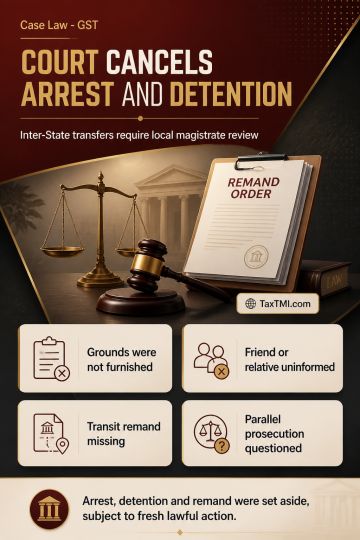
Arrest safeguards and transit remand requirements invalidated detention following inter-State transfer without communicated grounds or magistrate auth...
Arrest safeguards require disclosed grounds, relative intimation and transit remand, while duplicate prosecution under the CGST framework is unsustain...
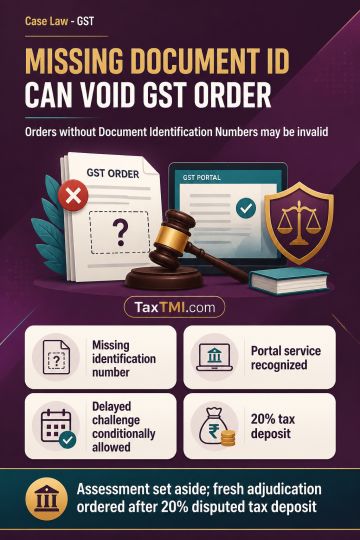
Document Identification Number defects can invalidate GST assessments, with delayed challenges entertained conditionally where patent irregularities e...
Windmill commissioning evidence supported higher depreciation where grid connection and electricity generation proved operational use before the relev...
Pharmaceutical promotion and transfer-pricing comparability principles limited disallowances, while uncorroborated search allegations and unsupported ...
Business expenditure substantiation supports scrap credits, statutory payments and expense claims, while depreciation requires proof of actual busines...
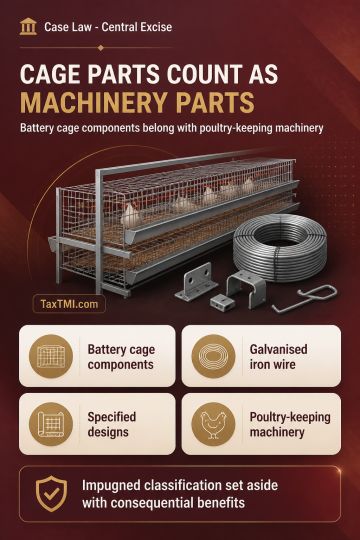
Welded mesh top, side, bottom, door and centre components made from galvanised iron wire exclusively for poultry battery cages are discussed as classifiable under CETH 84369100 as parts of poultry-keeping machinery, rather than under CETH 73089090 as iron and steel structures or parts. The material described the components as manufactured to specified designs and identifiable solely for battery cages. It notes that the absence of a mechanical function in the assembled cage did not establish classification as structural goods, and that reliance on the cited Supreme Court order was misplaced because the subsequent appellate decision accepted the machinery-parts classification. The impugned classification was set aside with consequential benefits.
Welded mesh top, side, bottom, door and centre components made from galvanised iron wire exclusively for poultry battery cages are discussed as classifiable under CETH 84369100 as parts of poultry-keeping machinery, rather than under CETH 73089090 as iron and steel structures or parts. The material described the components as manufactured to specified designs and identifiable solely for battery cages. It notes that the absence of a mechanical function in the assembled cage did not establish classification as structural goods, and that reliance on the cited Supreme Court order was misplaced because the subsequent appellate decision accepted the machinery-parts classification. The impugned classification was set aside with consequential benefits.
Note: It is a system-generated summary and is for quick reference only.
 TaxTMI
 of 4784
















 Join Channel


 TaxTMI