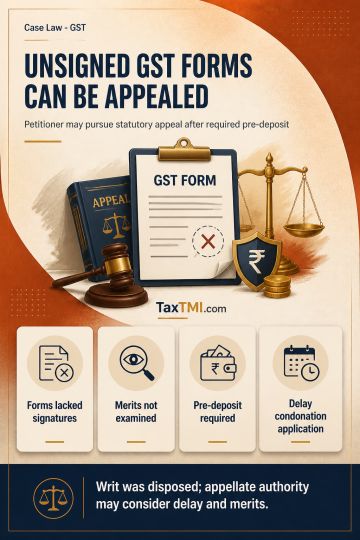
Political contribution deductions require recipient party compliance with contribution-reporting conditions; banking-channel donations alone do not qu...
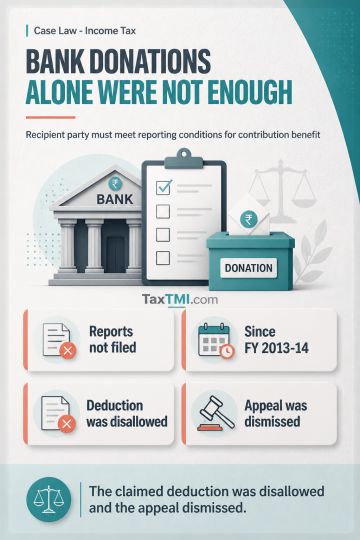
Aggregation under TNMM prevents selective testing of intra-group services without comparable uncontrolled transactions, while appellate additional cla...
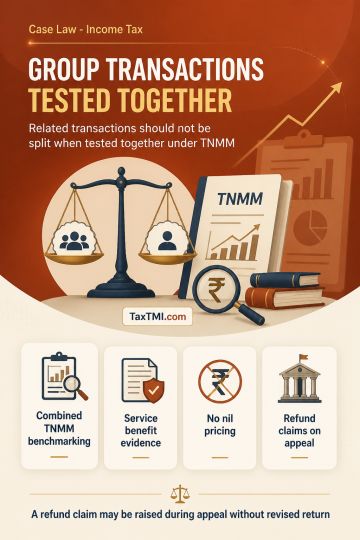
Protective assessment cannot duplicate identical receipts under competing characterisations; remote services did not establish a taxable permanent est...
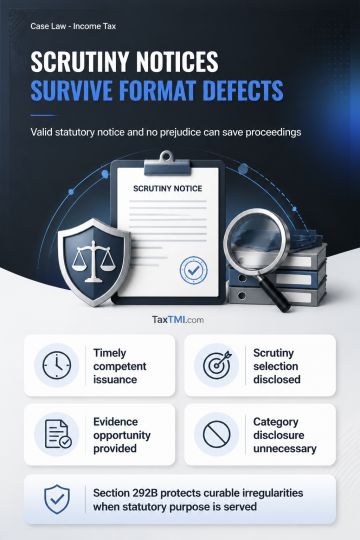
Current account treatment of overseas tournament services removed most FEMA findings, but excess EEFC remittance and delayed repatriation remained bre...
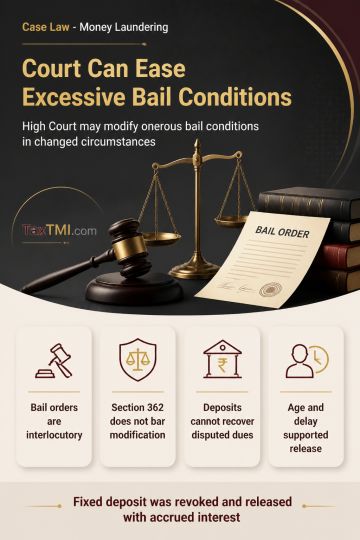
Modification of bail conditions remains available through inherent jurisdiction where onerous deposits undermine justice and cannot recover disputed d...
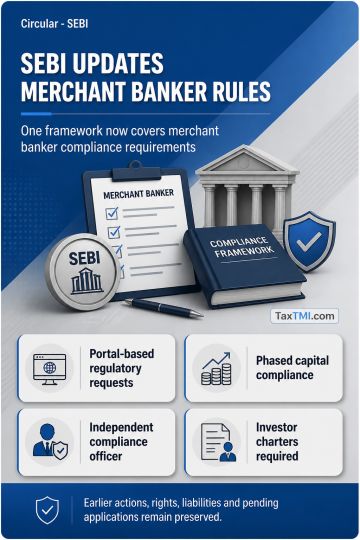
Merchant banker regulation consolidates registration, governance, capital, reporting, outsourcing and investor-protection requirements under an update...
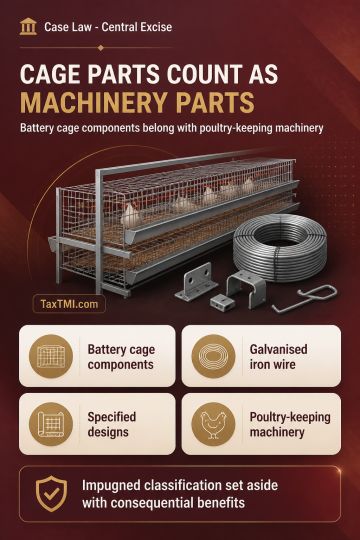
Welded mesh top, side, bottom, door and centre components made from galvanised iron wire exclusively for poultry battery cages are discussed as classifiable under CETH 84369100 as parts of poultry-keeping machinery, rather than under CETH 73089090 as iron and steel structures or parts. The material described the components as manufactured to specified designs and identifiable solely for battery cages. It notes that the absence of a mechanical function in the assembled cage did not establish classification as structural goods, and that reliance on the cited Supreme Court order was misplaced because the subsequent appellate decision accepted the machinery-parts classification. The impugned classification was set aside with consequential benefits.
Welded mesh top, side, bottom, door and centre components made from galvanised iron wire exclusively for poultry battery cages are discussed as classifiable under CETH 84369100 as parts of poultry-keeping machinery, rather than under CETH 73089090 as iron and steel structures or parts. The material described the components as manufactured to specified designs and identifiable solely for battery cages. It notes that the absence of a mechanical function in the assembled cage did not establish classification as structural goods, and that reliance on the cited Supreme Court order was misplaced because the subsequent appellate decision accepted the machinery-parts classification. The impugned classification was set aside with consequential benefits.
Note: It is a system-generated summary and is for quick reference only.
 TaxTMI
 of 4782










 Join Channel


 TaxTMI