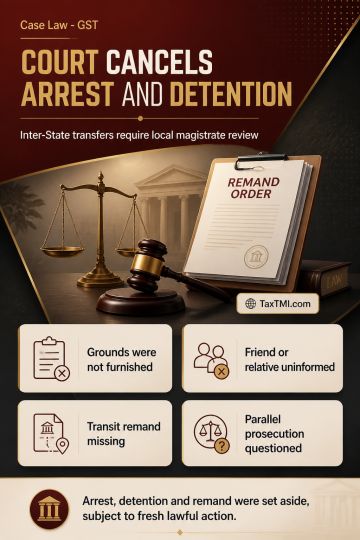
Arrest safeguards and transit remand requirements invalidated detention following inter-State transfer without communicated grounds or magistrate auth...
Arrest safeguards require disclosed grounds, relative intimation and transit remand, while duplicate prosecution under the CGST framework is unsustain...
Document Identification Number defects can invalidate GST assessments, with delayed challenges entertained conditionally where patent irregularities e...
Windmill commissioning evidence supported higher depreciation where grid connection and electricity generation proved operational use before the relev...
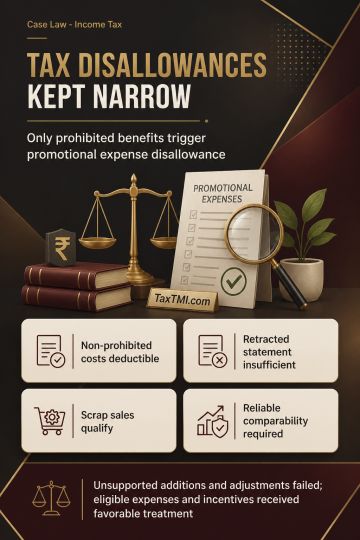
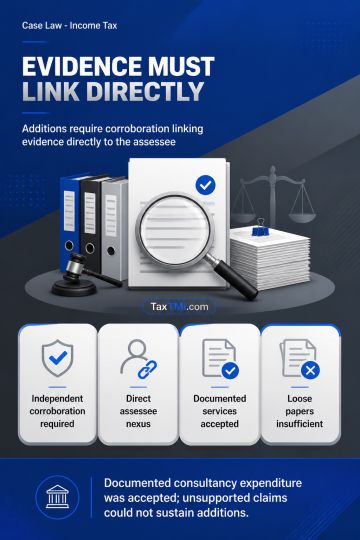
Pharmaceutical promotion and transfer-pricing comparability principles limited disallowances, while uncorroborated search allegations and unsupported ...
Section 628 of the Companies Act, 1956 can apply to an...
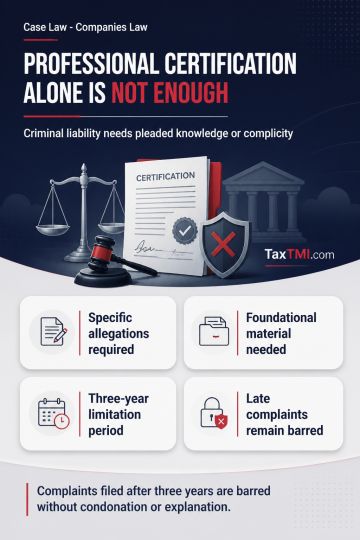
Independent professional certification requires pleaded knowledge or complicity for criminal liability; untimely complaints remain barred by limitation.
Contents
Summary
Note
Bookmark
Share
✓ Copied successfully !
Print
Print Options
For full text, please login
Login to TaxTMI
Verification Pending
The Email Id has not been verified. Click on the link we have sent on
Section 628 of the Companies Act, 1956 can apply to an independent professional who certifies statutory e-Forms, but liability requires specific allegations and foundational material showing conscious knowledge of falsity or active complicity. Mere certification, without pleaded knowledge, connivance or direct nexus to falsification, does not establish the required mens rea. For offences punishable by imprisonment up to two years, the limitation period for taking cognizance is three years, calculated from filing of the complaint. A complaint filed after that period, without a condonation application or explanation under the Cr.P.C., is barred by limitation.
Section 628 of the Companies Act, 1956 can apply to an independent professional who certifies statutory e-Forms, but liability requires specific allegations and foundational material showing conscious knowledge of falsity or active complicity. Mere certification, without pleaded knowledge, connivance or direct nexus to falsification, does not establish the required mens rea. For offences punishable by imprisonment up to two years, the limitation period for taking cognizance is three years, calculated from filing of the complaint. A complaint filed after that period, without a condonation application or explanation under the Cr.P.C., is barred by limitation.
Note: It is a system-generated summary and is for quick reference only.
 TaxTMI
 of 4782














 Join Channel


 TaxTMI
