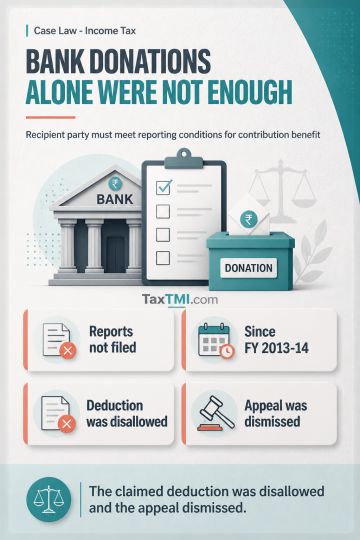
Political contribution deductions require recipient party compliance with contribution-reporting conditions; banking-channel donations alone do not qu...
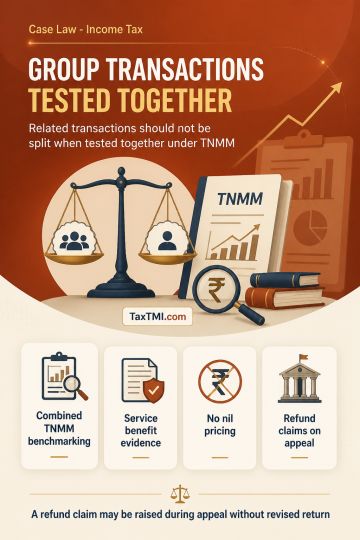
Aggregation under TNMM prevents selective testing of intra-group services without comparable uncontrolled transactions, while appellate additional cla...
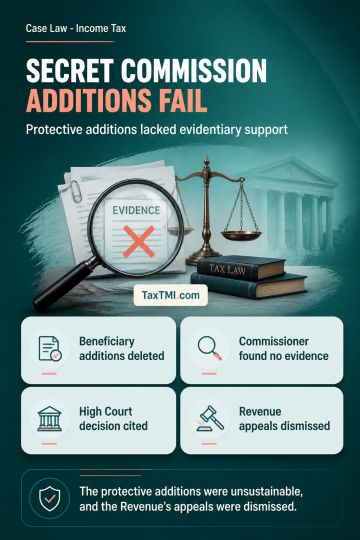
Protective assessment cannot duplicate identical receipts under competing characterisations; remote services did not establish a taxable permanent est...
Current account treatment of overseas tournament services removed most FEMA findings, but excess EEFC remittance and delayed repatriation remained bre...
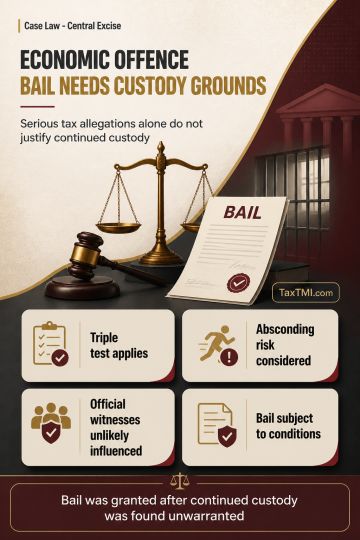
Modification of bail conditions remains available through inherent jurisdiction where onerous deposits undermine justice and cannot recover disputed d...
Merchant banker regulation consolidates registration, governance, capital, reporting, outsourcing and investor-protection requirements under an update...
Post-award interim measures under Section 9 of the Arbitration and Conciliation Act, 1996 are available to any party to an arbitration agreement, including an unsuccessful arbitral party with no award in its favour. The provision's plain language does not confine relief to award-holders, while Sections 34 and 36 separately address challenges to and stays of awards. An unsuccessful party must satisfy the usual tests of prima facie case, balance of convenience and irreparable injury under a higher threshold. Relief should therefore be granted only carefully, cautiously and in rare, compelling circumstances to prevent irreparable prejudice and preserve challenge proceedings.
Post-award interim measures under Section 9 of the Arbitration and Conciliation Act, 1996 are available to any party to an arbitration agreement, including an unsuccessful arbitral party with no award in its favour. The provision's plain language does not confine relief to award-holders, while Sections 34 and 36 separately address challenges to and stays of awards. An unsuccessful party must satisfy the usual tests of prima facie case, balance of convenience and irreparable injury under a higher threshold. Relief should therefore be granted only carefully, cautiously and in rare, compelling circumstances to prevent irreparable prejudice and preserve challenge proceedings.
Note: It is a system-generated summary and is for quick reference only.
 TaxTMI
 of 4782

















 Join Channel



 TaxTMI