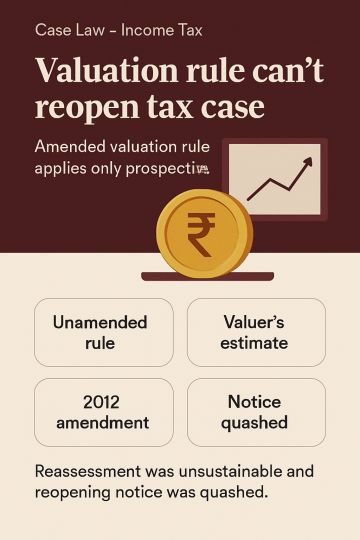
Prospective valuation amendment limits reassessment: unamended fair market value reference could not justify reopening based on a registered valuer's ...
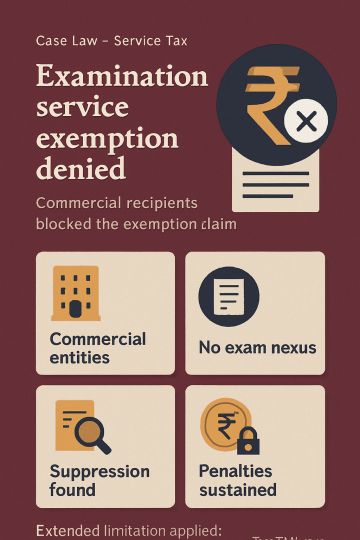
Exemption for examination-related services rejected where recipients were commercial entities; suppression sustained extended limitation and penalties...
Page of 4798
Press 'Enter' after typing page number.
1281 to 1300 of 95957 Results
❮
❯
❯❯
0 / 200
Expand Note
Add to Folder
No Folders have been created
+
Are you sure you want to delete "My most important" ?
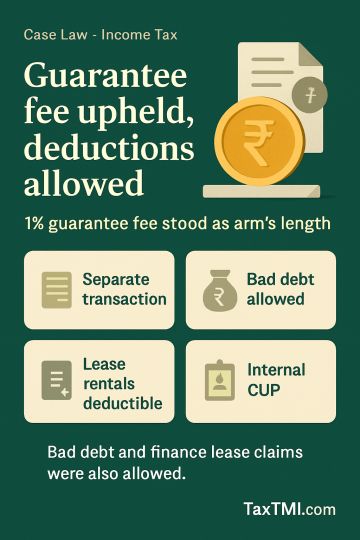
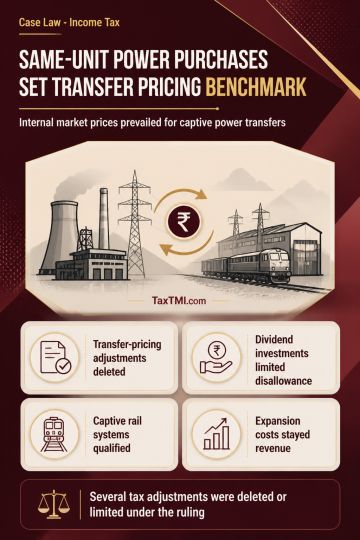
Internal comparable pricing for captive power transfers was accepted where the same consuming units bought electricity from State distribution companies in the same market and period, resulting in deletion of transfer-pricing adjustments. Exempt-income disallowance was confined to dividend-yielding investments, and MAT adjustments required an independent determination of expenditure from the accounts. Expansion-related operating costs remained revenue expenditure unless directly attributable to acquiring or installing capital assets. Captive rail systems qualified as infrastructure facilities for section 80-IA, while common costs required expenditure-based allocation supported by a nexus. Incentives linked to capital investment and expansion were treated as capital receipts and excluded from book profit. The notes also address investment allowance, additional depreciation, bad debts, leave encashment, and specified MAT adjustments.
Internal comparable pricing for captive power transfers was accepted where the same consuming units bought electricity from State distribution companies in the same market and period, resulting in deletion of transfer-pricing adjustments. Exempt-income disallowance was confined to dividend-yielding investments, and MAT adjustments required an independent determination of expenditure from the accounts. Expansion-related operating costs remained revenue expenditure unless directly attributable to acquiring or installing capital assets. Captive rail systems qualified as infrastructure facilities for section 80-IA, while common costs required expenditure-based allocation supported by a nexus. Incentives linked to capital investment and expansion were treated as capital receipts and excluded from book profit. The notes also address investment allowance, additional depreciation, bad debts, leave encashment, and specified MAT adjustments.
Note: It is a system-generated summary and is for quick reference only.
 TaxTMI
 of 4798










 Join Channel


 TaxTMI