Transfer pricing and tax deductions upheld on established principles, while employee contributions and warranty provisions returned for fresh examinat...
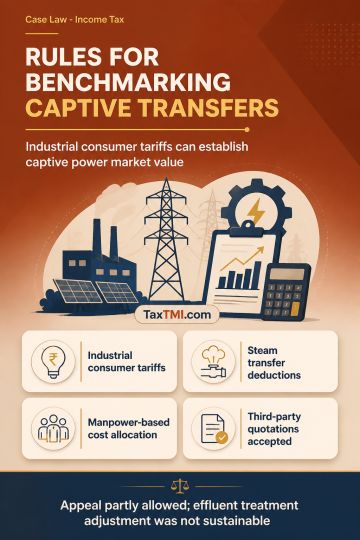
Captive transfer pricing relies on industrial consumer tariffs, while genuine quotations can benchmark effluent treatment transfers under the Other Me...
Specific tariff classification for ophthalmic instruments and extended limitation principles determine the treatment of duty demands, confiscation, an...
Integrated golf function determines classification, placing launch monitors and simulators under other golf equipment rather than measuring instrument...
Public servant status under anti-corruption law extends to recognised stock exchange leadership; constitutional and sanction challenges do not succeed...
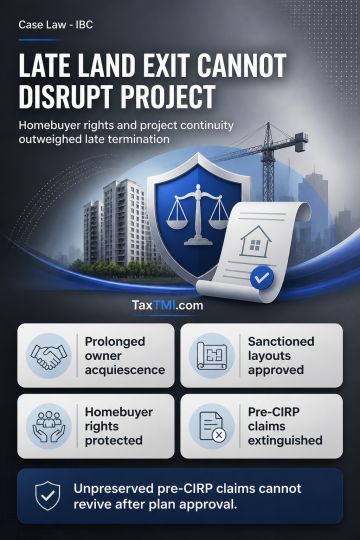
Acquiescence, homebuyer protection and clean-slate resolution principles prevent landowners from disrupting an integrated project through late termina...
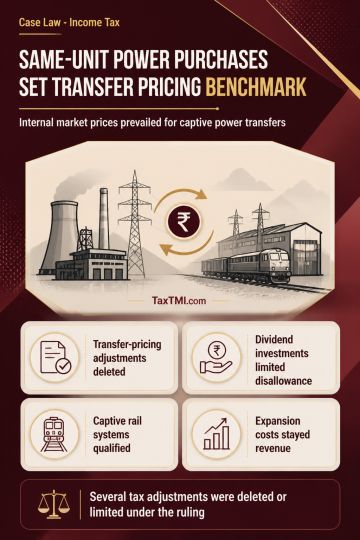
Internal comparable pricing for captive power transfers was accepted where the same consuming units bought electricity from State distribution companies in the same market and period, resulting in deletion of transfer-pricing adjustments. Exempt-income disallowance was confined to dividend-yielding investments, and MAT adjustments required an independent determination of expenditure from the accounts. Expansion-related operating costs remained revenue expenditure unless directly attributable to acquiring or installing capital assets. Captive rail systems qualified as infrastructure facilities for section 80-IA, while common costs required expenditure-based allocation supported by a nexus. Incentives linked to capital investment and expansion were treated as capital receipts and excluded from book profit. The notes also address investment allowance, additional depreciation, bad debts, leave encashment, and specified MAT adjustments.
Internal comparable pricing for captive power transfers was accepted where the same consuming units bought electricity from State distribution companies in the same market and period, resulting in deletion of transfer-pricing adjustments. Exempt-income disallowance was confined to dividend-yielding investments, and MAT adjustments required an independent determination of expenditure from the accounts. Expansion-related operating costs remained revenue expenditure unless directly attributable to acquiring or installing capital assets. Captive rail systems qualified as infrastructure facilities for section 80-IA, while common costs required expenditure-based allocation supported by a nexus. Incentives linked to capital investment and expansion were treated as capital receipts and excluded from book profit. The notes also address investment allowance, additional depreciation, bad debts, leave encashment, and specified MAT adjustments.
Note: It is a system-generated summary and is for quick reference only.
 TaxTMI
 of 4794












 Join Channel


 TaxTMI