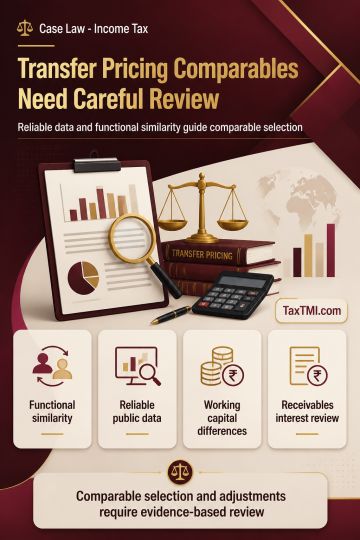
Transfer pricing comparability requires functional alignment, reliable financial data, and careful review of working capital and receivables adjustmen...
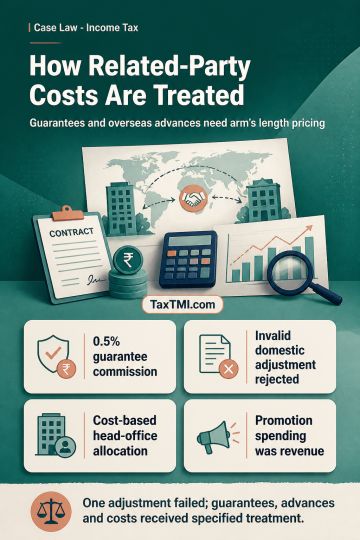
Transfer pricing rules require benchmarking corporate guarantees and associated-enterprise advances, while invalid domestic-transaction adjustments ca...
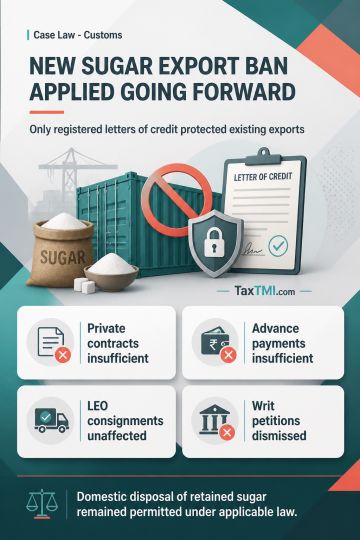
Prospective sugar export prohibition required registered letters of credit; private contracts and export quotas created no enforceable continuation ri...
Retroactive interim-moratorium exclusion permits protective asset disclosure and preservation measures against personal guarantors pending arbitration...
Page of 4778
Press 'Enter' after typing page number.
61 to 80 of 95557 Results
❮
❯
❯❯
0 / 200
Expand Note
Add to Folder
No Folders have been created
+
Are you sure you want to delete "My most important" ?
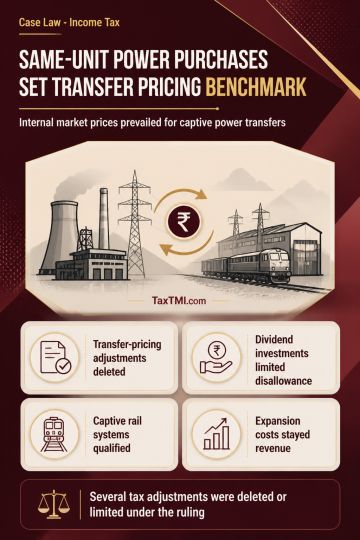
Internal comparable pricing for captive power transfers was accepted where the same consuming units bought electricity from State distribution companies in the same market and period, resulting in deletion of transfer-pricing adjustments. Exempt-income disallowance was confined to dividend-yielding investments, and MAT adjustments required an independent determination of expenditure from the accounts. Expansion-related operating costs remained revenue expenditure unless directly attributable to acquiring or installing capital assets. Captive rail systems qualified as infrastructure facilities for section 80-IA, while common costs required expenditure-based allocation supported by a nexus. Incentives linked to capital investment and expansion were treated as capital receipts and excluded from book profit. The notes also address investment allowance, additional depreciation, bad debts, leave encashment, and specified MAT adjustments.
Internal comparable pricing for captive power transfers was accepted where the same consuming units bought electricity from State distribution companies in the same market and period, resulting in deletion of transfer-pricing adjustments. Exempt-income disallowance was confined to dividend-yielding investments, and MAT adjustments required an independent determination of expenditure from the accounts. Expansion-related operating costs remained revenue expenditure unless directly attributable to acquiring or installing capital assets. Captive rail systems qualified as infrastructure facilities for section 80-IA, while common costs required expenditure-based allocation supported by a nexus. Incentives linked to capital investment and expansion were treated as capital receipts and excluded from book profit. The notes also address investment allowance, additional depreciation, bad debts, leave encashment, and specified MAT adjustments.
Note: It is a system-generated summary and is for quick reference only.
 TaxTMI
 of 4778









 Join Channel


 TaxTMI